




3 Proven Skincare Ingredients Compared: Vitamin C vs Hyaluronic Acid vs Retinol
By Dr Matete Mathobela
Reviewed by Dr Matete Mathobela
Specialist Dermatologist practising in Century City, Cape Town, Cape Gate Mediclinic and Life West Coast Private Hospital. Founder of MD Cosmeceuticals by Matete Derma and MD Dermoutlet.
Medical Disclaimer
This article is intended for educational purposes only and should not replace personalised medical advice. If you have persistent skin concerns, consult a dermatologist or another qualified healthcare professional.
Introduction
Vitamin C vs Hyaluronic Acid vs Retinol is one of the most common skincare comparisons people search for. Each ingredient has unique benefits, but choosing the right one depends on your skin concerns.
If you’ve ever searched for the “best serum” for your skin, you’ve probably come across three ingredients over and over again: Vitamin C, Hyaluronic Acid and Retinol.
They’re often described as skincare essentials—and for good reason. Each has been extensively studied in dermatology and can play an important role in maintaining healthy skin. However, despite their popularity, they do very different jobs.
Many people assume that every serum works in the same way, or that using more serums automatically leads to better results. In reality, the best serum is the one that addresses your primary skin concern. Someone struggling with dehydration needs a different approach from someone trying to reduce pigmentation or improve wrinkles.
The good news is that you don’t necessarily have to choose just one. When used correctly, Vitamin C, Hyaluronic Acid and Retinol can complement one another as part of a well-balanced skincare routine.
In this guide, we’ll compare these three dermatologist-recommended ingredients, explain what each one does, discuss who they’re best suited for and show you how they can be combined safely for healthier, more resilient skin.
Vitamin C vs Hyaluronic Acid vs Retinol: What’s the Difference?At a Glance: Comparing the Three Serums
| Feature |
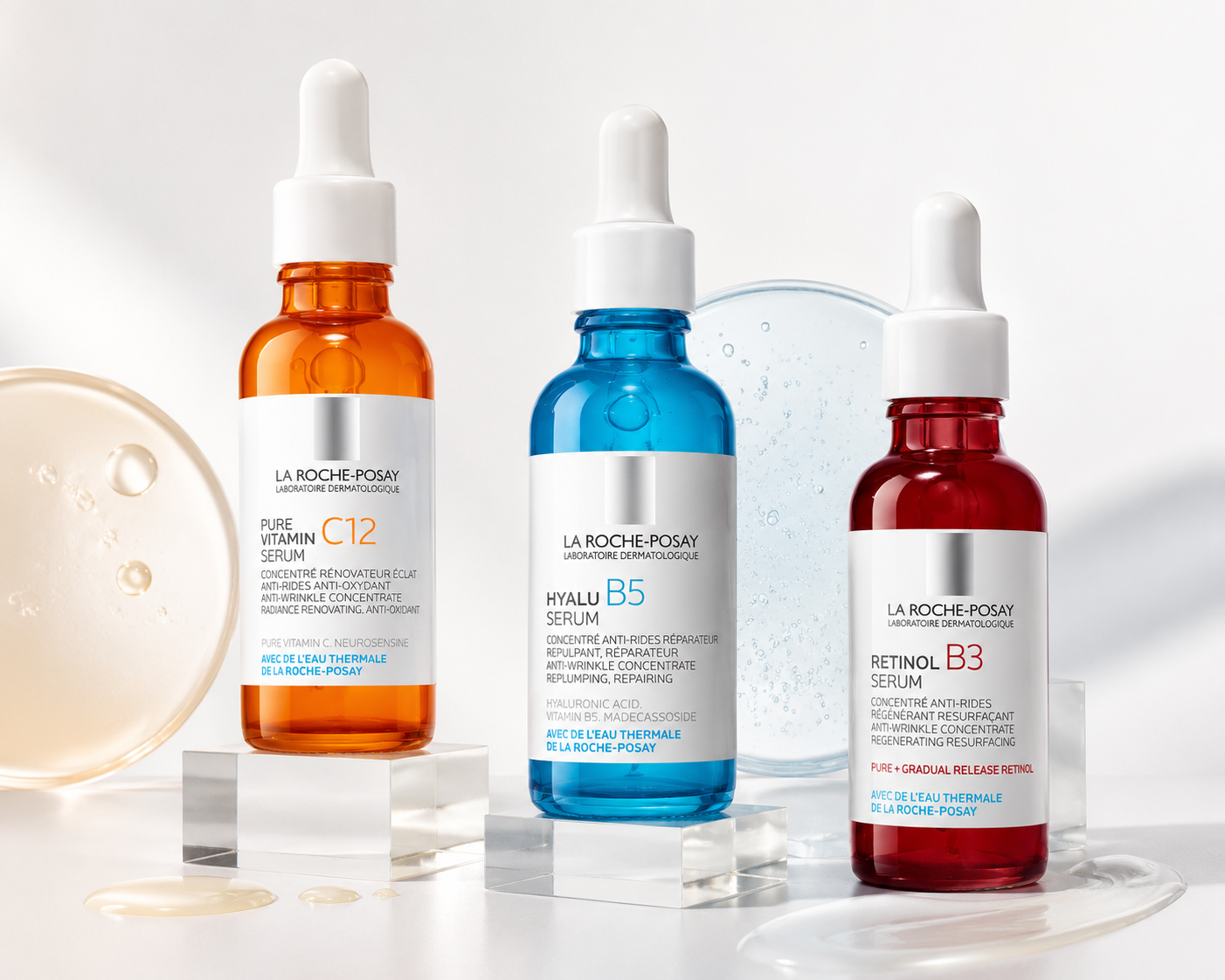
La Roche-Posay Pure Vitamin C12 Serum |
La Roche-Posay Hyalu B5 Serum |
La Roche-Posay Retinol B3 Serum |
|---|---|---|---|
| Primary Concern | Dullness, pigmentation and early signs of ageing | Dehydration and barrier support | Fine lines, wrinkles and uneven texture |
| Hero Ingredients | Pure Vitamin C, Salicylic Acid, Neurosensine | Hyaluronic Acid, Vitamin B5, Madecassoside | Retinol, Niacinamide |
| Best Time to Use | Morning | Morning and/or Evening | Evening |
| Suitable For | Most skin types | All skin types | Most skin types (introduce gradually if sensitive) |
| Main Benefit | Brightens and protects | Hydrates and strengthens the barrier | Renews and smooths the skin |
| Daily Sunscreen Needed? | Recommended | Recommended | Essential |
When comparing Vitamin C vs Hyaluronic Acid vs Retinol, it’s important to remember that these ingredients are designed to achieve different goals.
Which Serum Is Right for Your Skin Concern?
Rather than asking “Which serum is best?”, it’s more useful to ask “What problem am I trying to solve?” Each serum targets a different aspect of skin health, and understanding these differences can help you choose a routine that’s more likely to deliver lasting results.
| If your main concern is… | Best Choice |
|---|---|
| Dull or tired-looking skin | Pure Vitamin C12 Serum |
| Uneven skin tone | Pure Vitamin C12 Serum |
| Pigmentation | Pure Vitamin C12 Serum |
| Dehydrated skin | Hyalu B5 Serum |
| Tight or uncomfortable skin | Hyalu B5 Serum |
| Weakened skin barrier | Hyalu B5 Serum |
| Fine lines and wrinkles | Retinol B3 Serum |
| Uneven skin texture | Retinol B3 Serum |
| Loss of skin firmness | Retinol B3 Serum |
| A complete anti-ageing routine | Vitamin C10 (morning) + Retinol B3 (evening) + Hyalu B5 as needed |
When comparing Vitamin C vs Hyaluronic Acid vs Retinol, the best choice depends on whether you’re treating pigmentation, dehydration or signs of ageing.
Which Serum Is Best for Your Age?
Although your age can influence your skincare goals, it’s your skin concerns—not the number on your birthday—that should guide your routine.
| Age Group | Common Concerns | Recommended Serum |
|---|---|---|
| 20s | Prevention, dullness, maintaining healthy skin | Pure Vitamin C12 Serum |
| 30s | Early fine lines, dehydration, uneven tone | Pure Vitamin C12 Serum + Hyalu B5 Serum |
| 40s | Wrinkles, pigmentation, reduced firmness | Pure Vitamin C12 Serum + Retinol B3 Serum + Hyalu B5 Serum |
| 50+ | Photoageing, deeper wrinkles, dryness, loss of elasticity | Retinol B3 Serum + Hyalu B5 Serum, with Pure Vitamin C12 Serum in the morning |
These are general recommendations, and individual factors such as sun exposure, skin type and existing skin conditions should always be considered when choosing skincare.
Dermatologist’s Perspective
One of the biggest misconceptions I encounter is that there is a single “best” serum for everyone. In reality, the most effective serum is the one that addresses your skin’s primary concern. Once you’ve identified that concern, it’s much easier to build a simple, evidence-based routine that delivers consistent, long-term results.
Can You Use Vitamin C, Hyaluronic Acid and Retinol Together?
Yes—in fact, many dermatologists recommend using these ingredients together because they complement one another rather than competing. The key is knowing when to use each serum and introducing active ingredients gradually.
Vitamin C works best during the day, helping to protect the skin from environmental damage while brightening the complexion. Retinol is most effective at night because it encourages skin renewal while you sleep and can make the skin more sensitive to sunlight. Hyalu B5 Serum is the most versatile of the three, providing hydration and barrier support whenever your skin needs it.
When used correctly, these ingredients can create a simple routine that targets hydration, pigmentation and visible signs of ageing without unnecessarily complicating your skincare.
Dermatologist-Recommended Combinations
| Combination | Why It Works |
|---|---|
| Pure Vitamin C12 + Hyalu B5 | An excellent morning routine that brightens the skin while maintaining hydration and supporting the skin barrier. |
| Retinol B3 + Hyalu B5 | An ideal evening combination. Hyalu B5 helps reduce dryness and discomfort that can occur when starting retinol. |
| Pure Vitamin C12 + Retinol B3 | Use Vitamin C12 in the morning and Retinol B3 in the evening for antioxidant protection during the day and skin renewal overnight. |
| All Three Serums | A balanced routine for people wanting to target dullness, dehydration and visible signs of ageing simultaneously. |
A Simple Morning and Evening Routine
One of the biggest mistakes people make is trying to use every active ingredient at the same time. Instead, divide your routine into morning and evening steps.
| Morning Routine | Evening Routine |
|---|---|
| Gentle Cleanser | Gentle Cleanser |
| Pure Vitamin C12 Serum | Retinol B3 Serum* |
| Hyalu B5 Serum | Hyalu B5 Serum |
| Moisturiser | Moisturiser |
| Broad-spectrum Sunscreen (SPF 50+) | — |
*If you’re new to retinol, start by using it only two nights a week before increasing the frequency as your skin adapts.
A Beginner’s Guide to Retinol
Retinol is widely regarded as one of the most effective topical ingredients for improving fine lines, wrinkles and uneven skin texture. However, it should be introduced gradually to minimise irritation while your skin adjusts.
A slow, consistent approach often produces better long-term results than applying retinol every night from the beginning.
| Time Period | How Often to Apply |
|---|---|
| Weeks 1–2 | Two evenings per week |
| Weeks 3–4 | Three evenings per week |
| After One Month | Increase gradually as tolerated |
If your skin becomes dry, flaky or irritated, reduce the frequency and focus on hydration with Hyalu B5 Serum and a moisturiser before increasing retinol use again.
Common Mistakes to Avoid
Even the best serum won’t deliver the desired results if it’s used incorrectly. These are some of the most common mistakes I see in clinical practice:
- Choosing a serum because it’s trending rather than because it suits your skin concern.
- Expecting visible improvements after only a few days of use.
- Starting retinol every night instead of introducing it gradually.
- Forgetting to moisturise when using active ingredients.
- Skipping sunscreen, especially when using Vitamin C or Retinol.
- Layering too many active ingredients without understanding how they work together.
- Constantly changing products before giving them enough time to work.
Consistency almost always produces better results than using an overly complicated skincare routine.
Frequently Asked Questions
Which serum should I start with?
Start with the serum that addresses your biggest concern. If your skin feels dehydrated, begin with Hyalu B5 Serum. If you’re concerned about dullness or pigmentation, Pure Vitamin C12 Serum is an excellent starting point. If your main concern is wrinkles or uneven texture, Retinol B3 Serum is usually the better choice.
Can I use all three serums?
Yes. Many people use Vitamin C12 in the morning, Retinol B3 in the evening and Hyalu B5 whenever extra hydration or barrier support is needed.
Is Hyalu B5 only for dry skin?
No. Oily skin can also become dehydrated, particularly after using acne treatments or exfoliating products. Hyalu B5 Serum is suitable for most skin types, including oily and combination skin.
How long does it take to see results?
Hydration from Hyalu B5 Serum may be noticeable within a few days. Improvements in brightness from Pure Vitamin C12 Serum often become more noticeable after several weeks of consistent use. Retinol B3 Serum generally requires 8 to 12 weeks before significant improvements in fine lines and skin texture become visible.
Do I still need sunscreen?
Absolutely. Daily broad-spectrum sunscreen is essential, regardless of your skincare routine. It becomes even more important when using active ingredients such as Vitamin C and Retinol because it helps prevent further UV damage and protects the improvements you’re working to achieve.
Which is better: Vitamin C, Hyaluronic Acid or Retinol?
When comparing Vitamin C vs Hyaluronic Acid vs Retinol, there isn’t a single ingredient that’s best for everyone. Vitamin C is ideal for brightening the skin and reducing pigmentation, Hyaluronic Acid is best for hydration and supporting the skin barrier, while Retinol is the gold standard for improving fine lines, wrinkles and uneven skin texture. The right choice depends on your skin concerns and goals.
My Dermatologist’s Recommendation
Patients often ask me which of these three serums is the “best.” When it comes to Vitamin C vs Hyaluronic Acid vs Retinol, there isn’t a single winner. The right choice depends on your skin’s current needs and the concerns you’re trying to treat.
If you’re looking to brighten your complexion and reduce pigmentation, La Roche-Posay Vitamin C12 Serum is usually the best place to start. If your skin feels dry, tight or easily irritated, Hyalu B5 Serum helps restore hydration and strengthen the skin barrier. For those concerned about fine lines, wrinkles and uneven texture, Retinol B3 Serum remains one of the most effective topical ingredients available.
Many people don’t need to choose just one. A simple routine using Vitamin C12 Serum in the morning, Retinol B3 Serum in the evening, and Hyalu B5 Serum whenever extra hydration is needed can provide a balanced, evidence-based approach to healthier skin.
Whether you’re comparing Vitamin C vs Hyaluronic Acid vs Retinol for pigmentation, dehydration or signs of ageing, the key is choosing ingredients that match your skin’s needs, using them consistently, and wearing a broad-spectrum sunscreen every day.
Conclusion
Vitamin C, Hyaluronic Acid and Retinol are three of the most extensively studied ingredients in modern skincare, but they are designed to achieve different goals. Vitamin C helps brighten the complexion and defend against environmental damage, Hyaluronic Acid restores hydration and supports the skin barrier, while Retinol encourages skin renewal and improves the appearance of fine lines and wrinkles.
The best serum isn’t the most expensive or the most popular—it’s the one that addresses your skin’s primary concern. Once you’ve identified that concern, you can build a simple routine that delivers consistent, long-term results.
If you’re still unsure which serum is right for you, a dermatologist can help you choose a routine based on your skin type, lifestyle and treatment goals, ensuring that every product you use has a clear purpose.Hopefully this guide has made the Vitamin C vs Hyaluronic Acid vs Retinol decision much easier.
Related Articles
Help your skin make the most of every active ingredient with these dermatologist-reviewed guides:
- La Roche-Posay Serums: The Complete Dermatologist’s Guide (South Africa)
- 2 MD Cosmeceuticals Vitamin C Serums Compared
- La Roche-Posay Anthelios: The Complete Dermatologist’s Guide
- Hyperpigmentation: The Complete Dermatologist’s Guide
- La Roche-Posay South Africa: The Complete Dermatologist’s Guide to Every Range
- MD Cosmeceuticals Pigmentation Routine: A Dermatologist’s Guide to Melasma & Dark Spots
- 4 SkinCeuticals Vitamin C Serums Compared: Which One Is Right for Your Skin?
References
Like & Share