




How to Use Benzac AC 5 Gel on Sensitive Skin: A Dermatologist’s Guide
By Dr Matete Mathobela
If you have sensitive skin, starting an acne treatment such as Benzac AC 5 Gel can feel daunting. Redness, dryness and peeling are common during the first few weeks, leading many people to stop treatment before their skin has had a chance to adjust.
The good news is that sensitive skin does not mean you cannot use Benzac AC 5 Gel. Learning how to use Benzac AC 5 Gel on sensitive skin correctly allows most people to build tolerance while still benefiting from one of the most effective first-line acne treatments available.
This guide explains how to use Benzac AC 5 Gel on sensitive skin, how to minimise irritation and when to seek advice from your dermatologist.
If you’re looking for a complete guide to benzoyl peroxide, combination therapy and acne management, read our article How to Use Benzac AC 5 Gel: A Dermatologist’s Guide.
Prefer to watch instead?
Watch my short TikTok video where I explain how to use Benzac AC 5 Gel correctly and the common mistakes to avoid before reading the guide below.
Why Does Benzac AC 5 Gel Cause Dryness?
Understanding how to use Benzac AC 5 Gel on sensitive skin begins with understanding why irritation occurs during the first few weeks of treatment.
Benzac AC 5 Gel contains 5% benzoyl peroxide, which works by reducing acne-causing bacteria and helping keep pores clear. During the first few weeks of treatment, however, the skin barrier may temporarily become disrupted, leading to:
- Dryness
- Tightness
- Mild peeling
- Redness
- A stinging sensation
These reactions are usually temporary and often improve as your skin adapts.
Start Slowly
One of the most important steps in how to use Benzac AC 5 Gel on sensitive skin is introducing treatment gradually instead of applying it every day from the start.
For most people with sensitive skin:
- Start by applying Benzac AC 5 Gel once every second or third evening.
- As your skin becomes more comfortable, gradually increase the frequency to every second evening.
- Once your skin has adapted, you can usually progress to once-daily evening application if well tolerated.
If irritation develops, reduce the frequency until your skin settles before increasing again.
Consider Short-Contact Therapy
If your skin remains very sensitive, short-contact therapy may improve tolerability.
Instead of leaving Benzac AC 5 Gel on overnight immediately, apply a thin layer after cleansing and leave it on for approximately 15 minutes before washing it off. As your skin adapts over several days or weeks, gradually increase the contact time before progressing to overnight application if tolerated.
Although not included in the manufacturer’s instructions, short-contact therapy is a commonly used dermatological strategy for selected patients who struggle with irritation.
Moisturise Every Day
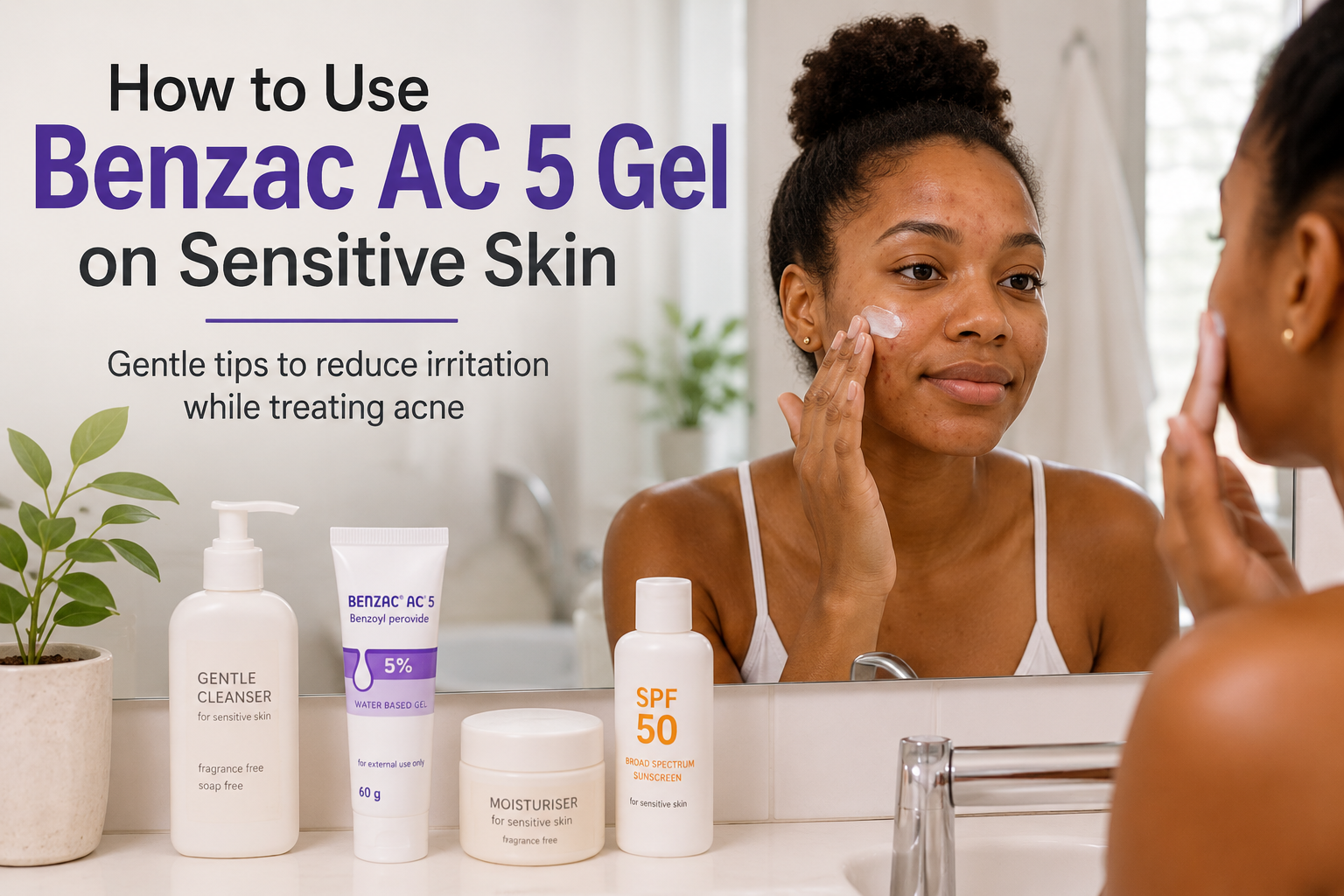
If you’re wondering how to use Benzac AC 5 Gel on sensitive skin without excessive dryness, moisturising consistently is one of the most effective ways to protect your skin barrier.
For spot treatment, many patients with sensitive skin tolerate the following routine well:
Cleanser → Moisturiser → Benzac AC 5 Gel (active pimples only)
Applying moisturiser first helps reduce irritation while preventing benzoyl peroxide from spreading unnecessarily over unaffected areas of the face.
If you’re treating larger acne-prone areas, your dermatologist may instead recommend:
Cleanser → Benzac AC 5 Gel → Moisturiser
The best routine depends on your skin and the severity of your acne.
Shop Benzac AC 5 Gel online at mddermoutlet.
Don’t Forget Sunscreen
Daily sunscreen is an important part of how to use Benzac AC 5 Gel on sensitive skin.
Sensitive skin is more susceptible to irritation from sunlight, and acne inflammation can increase the risk of post-inflammatory hyperpigmentation.
Use a broad-spectrum sunscreen every morning and avoid excessive sun exposure or UV tanning beds whenever possible.
Shop sunscreens online at mddermoutlet.
Common Mistakes to Avoid
Many people struggle with how to use Benzac AC 5 Gel on sensitive skin because they introduce treatment too aggressively.
Avoid these common mistakes:
- Applying more gel than necessary.
- Using harsh scrubs or exfoliating acids at the same time.
- Increasing the frequency too quickly.
- Skipping moisturiser.
- Stopping treatment after only a few days.
- Forgetting that benzoyl peroxide can bleach clothing, towels and pillowcases.
- Applying the gel too close to the eyes, lips or inside the nose.
When Should You See a Dermatologist?
If you’ve learned how to use Benzac AC 5 Gel on sensitive skin but your acne continues to worsen, or irritation remains severe despite reducing application frequency, it may be time to consult a dermatologist.
You should also seek medical advice if:
- Your acne is leaving permanent scars.
- You develop persistent dark marks.
- Your acne requires prescription-strength medication or combination therapy.
Book a consultation with our dermatologist.
Final Thoughts
Learning how to use Benzac AC 5 Gel on sensitive skin is about introducing treatment gradually while protecting your skin barrier. Most people can successfully use benzoyl peroxide by starting slowly, moisturising consistently and adjusting the frequency if irritation occurs.
If you’ve tried these strategies and are still struggling, a dermatologist can help tailor an acne treatment plan that’s effective without compromising your skin barrier.
Shop for sensitive skin products online at mddermoutlet.
Frequently Asked Questions
Can I use Benzac AC 5 Gel if I have sensitive skin?
Yes. Most people with sensitive skin can use Benzac AC 5 Gel successfully by introducing it gradually, using a gentle moisturiser and reducing the frequency if irritation develops. Learning how to use Benzac AC 5 Gel on sensitive skin correctly often allows treatment to continue comfortably.
What is short-contact therapy?
Short-contact therapy involves applying Benzac AC 5 Gel for a short period, usually around 15 minutes, before washing it off. As your skin becomes more tolerant, the contact time can be increased before progressing to overnight application. This approach may be recommended by dermatologists for selected patients with sensitive skin.
How often should I apply Benzac AC 5 Gel if I have sensitive skin?
Most people with sensitive skin should begin by applying Benzac AC 5 Gel once every second or third evening. As your skin adapts, the frequency can gradually be increased. If irritation develops, reduce the frequency until your skin feels comfortable again.
Should I apply moisturiser before or after Benzac AC 5 Gel?
It depends on how you are using it. For spot treatment, applying moisturiser first may reduce irritation and help prevent benzoyl peroxide from spreading over unaffected skin. For larger acne-prone areas, many people apply Benzac AC 5 Gel after cleansing and follow with a moisturiser. If you’re unsure how to use Benzac AC 5 Gel on sensitive skin, your dermatologist can recommend the best approach for your skin.
Is dryness and peeling normal?
Yes. Mild dryness, tightness and peeling are common during the first few weeks of treatment and usually improve as your skin adapts. Using a gentle moisturiser and introducing treatment gradually can significantly improve comfort.
Can I use other acne products at the same time?
Yes, but introduce new products slowly. Combining multiple active ingredients too quickly may increase irritation. If you are prescribed adapalene or topical clindamycin, ask your dermatologist how to incorporate them safely into your routine.
Does Benzac AC 5 Gel remove dark spots?
No. Benzac AC 5 Gel treats active acne and helps prevent new post-inflammatory dark marks by reducing inflammation, but it does not fade existing pigmentation.
Read next:
Does Benzac AC 5 Gel Remove Dark Spots? A Dermatologist Explains
Can Benzac AC 5 Gel bleach clothing and bedding?
Yes. Benzoyl peroxide can bleach coloured clothing, towels, pillowcases and bed linen. Allow the gel to dry completely before it comes into contact with fabrics, and wash your hands thoroughly after each application.
When should I see a dermatologist?
If you’ve learned how to use Benzac AC 5 Gel on sensitive skin but continue to experience severe irritation, worsening acne, acne scars or persistent dark marks, it’s time to consult a dermatologist. Early treatment adjustments often prevent long-term skin damage.
If you are struggling with acne you might also want to read our article on The secret life of a pimple:An unexpected journey on your skin.
Still worried about the safety of benzoyl peroxide?
Recent evidence continues to support the safety of benzoyl peroxide when used as directed. We’ve summarised the latest research in a quick Instagram post.
References
- https://www.jaad.org/article/S0190-9622(23)03389-3/fulltext
American Academy of Dermatology. Guidelines of Care for the Management of Acne Vulgaris. Journal of the American Academy of Dermatology. 2024. - https://www.aad.org/public/diseases/acne/derm-treat/treat
American Academy of Dermatology. Acne: Diagnosis and Treatment. - https://www.ncbi.nlm.nih.gov/books/NBK537220/
StatPearls. Benzoyl Peroxide. National Center for Biotechnology Information. - https://www.ncbi.nlm.nih.gov/books/NBK459173/
StatPearls. Acne Vulgaris. National Center for Biotechnology Information. - https://pubmed.ncbi.nlm.nih.gov/39002561/
Benzoyl Peroxide for Acne Treatment Is Not Associated with an Increased Risk of Malignancy. PubMed. - https://pi-pil-repository.sahpra.org.za/wp-content/uploads/2022/05/Benzac-Gel_approved-PIL_02052022.pdf
SAHPRA Approved Patient Information Leaflet. Benzac® AC Gel.
Like & Share