





MD Cosmeceuticals Pigmentation Routine: A Dermatologist’s Guide to Melasma & Dark Spots
By Dr Matete Mathobela
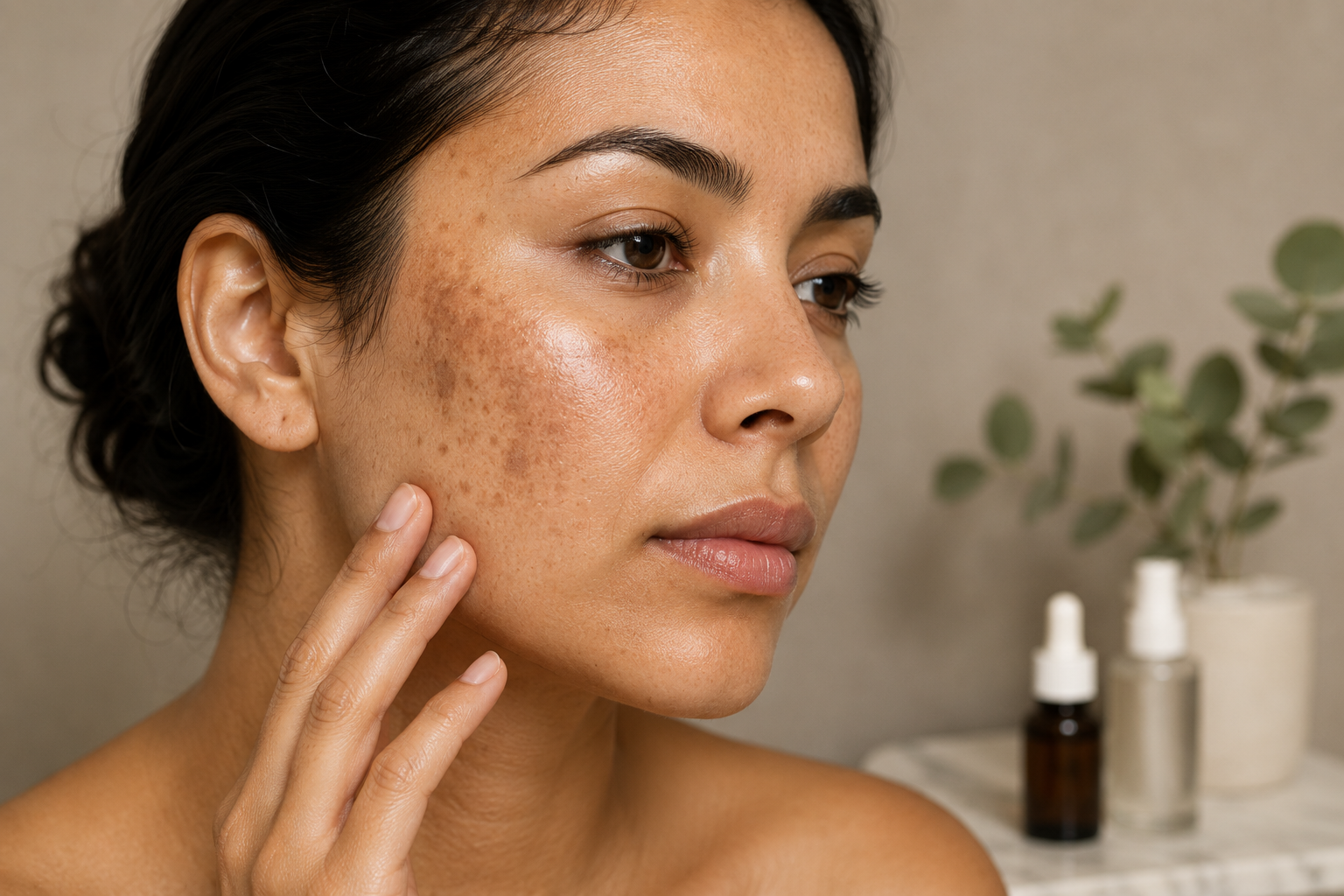
Pigmentation is one of the most common skin concerns seen in dermatology clinics worldwide. Whether it presents as melasma, acne marks, post-inflammatory hyperpigmentation, sun spots, or uneven skin tone, pigmentation can have a significant impact on confidence and quality of life.
While pigmentation affects all skin tones, it often poses a greater challenge in individuals with skin of colour. This is because darker skin contains more active melanocytes—the cells responsible for producing melanin. As a result, inflammation, hormonal changes, sun exposure, visible light, heat, and even minor skin irritation can trigger excessive pigment production that may persist long after the original trigger has resolved.
For many patients with skin of colour, the pigmentation left behind by acne, eczema, insect bites, or cosmetic procedures becomes more frustrating than the original condition itself. However, pigmentation is not exclusively a skin of colour concern. Melasma, sun-induced pigmentation, and post-inflammatory hyperpigmentation affect patients across all skin types and ethnic backgrounds.
The key to successful treatment is understanding that pigmentation is rarely caused by a single factor. Effective management requires reducing excess pigment production, controlling inflammation, accelerating the removal of existing pigment, and preventing new pigmentation from developing.
This is the philosophy behind the MD Cosmeceuticals pigmentation routine—a comprehensive approach designed to address multiple pigment pathways simultaneously while supporting long-term skin health.
Who Is This Pigmentation Routine For?
This pigmentation routine may be suitable for individuals struggling with:
- Melasma
- Acne marks and post-acne pigmentation
- Post-inflammatory hyperpigmentation
- Sun spots
- Uneven skin tone
- Pigmentation following eczema
- Pigmentation after cosmetic procedures
- Patients with skin of colour who are prone to persistent dark marks
If you have severe, rapidly changing, or unusual pigmentation, consultation with a dermatologist is recommended before starting treatment.
Understanding the Different Causes of Pigmentation
Melasma
Melasma typically presents as symmetrical brown or grey-brown patches on the cheeks, forehead, upper lip, and jawline.
Common triggers include:
- Hormonal fluctuations
- Pregnancy
- Oral contraceptives
- Genetics
- Ultraviolet radiation
- Visible light exposure
- Heat exposure
Melasma is one of the most challenging forms of pigmentation to treat because it is often recurrent and influenced by multiple triggers simultaneously.
Post-Inflammatory Hyperpigmentation (PIH)
Post-inflammatory hyperpigmentation occurs when inflammation stimulates melanocytes to produce excess melanin.
Common causes include:
- Acne
- Eczema
- Insect bites
- Burns
- Allergic reactions
- Cosmetic procedures
- Trauma to the skin
Although the inflammation may resolve quickly, the resulting pigmentation can persist for months or even years.
Acne-Induced Pigmentation
One of the most common causes of pigmentation encountered in dermatology practice is acne.
Many patients assume pigmentation develops only after acne has healed. However, research has shown that inflammation begins early in acne development, often before a visible lesion appears.
This means pigmentation can begin during active acne, not only after the pimple has resolved.
Inflammatory mediators released during acne stimulate melanocytes, resulting in increased melanin production. By the time the lesion becomes visible, pigment production may already be underway.
After the acne lesion resolves, excess pigment often remains behind as post-inflammatory hyperpigmentation.
For many patients, particularly those with skin of colour, the pigmentation left behind by acne becomes more troublesome than the acne itself.
This is why treating pigmentation without addressing active acne often leads to disappointing results. New lesions continue to create new pigment, perpetuating the cycle.
Solar Lentigines (Sun Spots)
Solar lentigines develop after years of cumulative sun exposure and commonly appear on the face, chest, shoulders, and hands.
Frictional Pigmentation
Repeated rubbing and chronic irritation may contribute to pigmentation on areas such as:
- Neck
- Underarms
- Groin
- Elbows
- Knees
Post-Procedure Pigmentation
Patients with darker skin tones may develop pigmentation following:
- Chemical peels
- Laser treatments
- Microneedling
- Surgical procedures
Appropriate skin preparation and aftercare are essential to minimise this risk.
Why Pigmentation Is Often More Challenging in Skin of Colour
Although pigmentation affects all skin types, it is particularly common and persistent in individuals with Fitzpatrick skin types IV, V, and VI.
Several factors contribute to this:
- Melanocytes are more reactive to inflammation.
- Even mild acne, eczema, or irritation can trigger significant pigment production.
- Pigment production may continue after the original inflammation has resolved.
- Visible light has a greater impact on melanogenesis in darker skin tones.
- Pigmentation often becomes the primary cosmetic concern even after the underlying skin condition is controlled.
This is why dermatologists place significant emphasis on preventing pigmentation from developing in the first place.
Early treatment of inflammatory skin conditions is often one of the most effective pigmentation prevention strategies.
The Four Pillars of Pigmentation Management
Every successful pigmentation routine should aim to:
- Reduce excess pigment production.
- Control inflammation.
- Accelerate the removal of existing pigment.
- Prevent future pigment formation.
The MD Cosmeceuticals pigmentation routine was developed around these principles.
The MD Cosmeceuticals Pigmentation Routine
Successful pigmentation treatment requires more than simply applying a brightening product. The goal is to address multiple pathways involved in pigment formation while simultaneously protecting the skin from future triggers.
The MD Cosmeceuticals pigmentation routine was designed to support this comprehensive approach by combining antioxidant protection, inflammation control, pigment regulation, skin renewal, barrier support, and photoprotection.
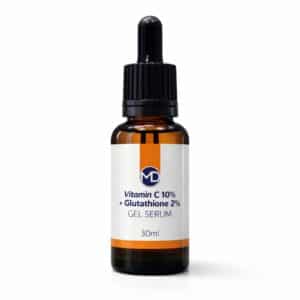
Step 1: Protect Against Oxidative Stress with MD Vitamin C + Glutathione Serum
Environmental stressors such as ultraviolet radiation, pollution, and inflammation can contribute to pigmentation and uneven skin tone.
MD Vitamin C + Glutathione Serum serves as the antioxidant foundation of the pigmentation routine. By helping to neutralise free radicals and reduce oxidative stress, it supports a brighter, more radiant complexion while complementing other pigment-correcting treatments.
Potential benefits include:
- Improved skin radiance
- Support for a more even skin tone
- Antioxidant protection against environmental damage
- Support for collagen production
- Long-term pigmentation prevention
Key Ingredients Include:
- 3-O-Ethyl Ascorbic Acid
- Glutathione
- Liquorice Root Extract
- Tocopherol (Vitamin E)
Step 2: Reduce Inflammation with MD Niacinamide Serum
Inflammation is one of the most important drivers of pigmentation, particularly in patients with acne-prone skin and skin of colour.
MD Niacinamide Serum helps address this by supporting the skin barrier and reducing inflammatory pathways that may contribute to pigment formation.
Potential benefits include:
- Reduced redness and inflammation
- Improved skin barrier function
- Support for acne-prone skin
- Reduced risk of post-inflammatory hyperpigmentation
- Improved overall skin resilience
Key Ingredients Include:
- Niacinamide
- Tetrapeptide-30
- Resveratrol
- Ubiquinone (CoQ10)
- Panthenol
Step 3: Protect Against UV and Visible Light with MD Tinted Sunscreen
No pigmentation routine can succeed without adequate photoprotection.
While ultraviolet radiation remains a major trigger for pigmentation, research increasingly shows that visible light also contributes to melasma and post-inflammatory hyperpigmentation, particularly in patients with skin of colour.
MD Tinted Sunscreen provides daily protection against both ultraviolet and visible light exposure.
Potential benefits include:
- Prevention of pigmentation worsening
- Reduced risk of melasma recurrence
- Protection against visible-light-induced pigmentation
- Daily antioxidant support
- Suitable camouflage for uneven skin tone
Key Features Include:
- Broad-spectrum UV protection
- Iron oxides for visible-light protection
- Antioxidant support
- Hydrating ingredients
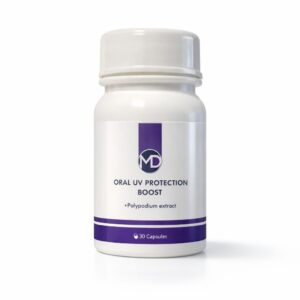
Step 4: Support Internal Photoprotection with MD Polypodium Leucotomos
Photoprotection starts from the outside but can also be supported from within.
MD Polypodium Leucotomos provides antioxidant support and may be a useful adjunct for patients managing chronic pigmentation disorders such as melasma.
Potential benefits include:
- Additional antioxidant protection
- Support for pigmentation management
- Adjunctive support for sun-sensitive individuals
- Long-term maintenance support
Step 5: Target Pigmentation at Multiple Levels with MD Melanclear Serum
MD Melanclear Serum serves as the cornerstone treatment product within the MD Cosmeceuticals pigmentation routine.
One of the challenges with pigmentation is that there is rarely a single cause. Melasma, acne marks, post-inflammatory hyperpigmentation, sun-induced pigmentation, and uneven skin tone are often driven by multiple pathways within the skin.
Rather than relying on a single brightening ingredient, Melanclear was developed to target several of these pathways simultaneously.
Potential benefits include:
- Improvement in the appearance of melasma
- Reduction in acne marks and post-inflammatory hyperpigmentation
- Support for a more even and radiant skin tone
- Reduction in the appearance of stubborn dark spots
- Complementing professional pigmentation treatments
- Long-term maintenance following pigmentation improvement
Key Pigment-Regulating Ingredients Include:
- Tranexamic Acid
- Alpha Arbutin
- Butylresorcinol
- Niacinamide
- Kojic Acid
- Tetrapeptide-30
- Undecylenoyl Phenylalanine
- Sodium Ascorbyl Phosphate
Step 6: Encourage Controlled Skin Renewal with MD Exfoliating Toner
Gentle exfoliation can help accelerate the removal of pigmented skin cells and improve the penetration of treatment products.
MD Exfoliating Toner supports controlled skin renewal without relying on aggressive daily exfoliation.
Potential benefits include:
- Improved skin texture
- Enhanced skin brightness
- Support for acne-prone skin
- Improved penetration of active ingredients
- Faster turnover of pigmented cells
Most patients benefit from using the toner two to three evenings per week rather than daily.
Step 7: Brighten While Supporting Barrier Health with MD Brightening Cream
Many pigmentation treatments focus solely on reducing pigment. However, maintaining a healthy skin barrier is equally important.
MD Brightening Cream combines pigment-correcting ingredients with barrier-supportive technology to help improve skin tone while maintaining comfort and tolerability.
Potential benefits include:
- Support for a brighter, more even complexion
- Reduction in the appearance of dark spots
- Improved skin barrier function
- Hydration and comfort
- Long-term maintenance support
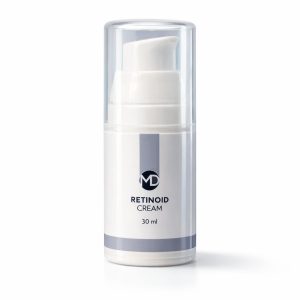
Step 8: Maintain Long-Term Results with MD Retinoid Cream
Retinoids remain one of the most valuable tools in pigmentation management.
MD Retinoid Cream supports skin renewal and helps maintain the results achieved through the rest of the pigmentation routine.
Potential benefits include:
- Improved skin turnover
- Enhanced skin smoothness
- Support for pigmentation maintenance
- Reduction in the appearance of uneven skin tone
- Long-term skin rejuvenation
Breaking the Acne-Pigmentation Cycle
One of the biggest mistakes patients make is waiting for acne to clear before addressing pigmentation.
Pigmentation prevention begins when acne treatment begins.
By controlling inflammation early and introducing appropriate pigment-correcting ingredients, patients can significantly reduce the severity and duration of acne-related pigmentation.
Sample MD Cosmeceuticals Pigmentation Routine
Morning
- Gentle cleanser
- MD Vitamin C + Glutathione Serum
- MD Niacinamide Serum
- MD Tinted Sunscreen
- MD Polypodium Leucotomos
Evening (Pigmentation Nights)
- Gentle cleanser
- MD Exfoliating Toner (2–3 evenings per week)
- MD Melanclear Serum
- MD Brightening Cream
Evening (Retinoid Nights)
- Gentle cleanser
- MD Melanclear Serum
- MD Retinoid Cream
When Professional Treatments May Be Needed
Some patients may benefit from:
- Chemical peels
- Microneedling
- Radiofrequency microneedling
- Laser treatments
- Prescription pigment therapies
A dermatologist can help determine the most appropriate treatment based on the cause and depth of pigmentation.
Frequently Asked Questions
Can pigmentation disappear completely?
It depends on the cause and depth of the pigmentation. Superficial pigmentation often improves significantly, while deeper pigmentation may require ongoing maintenance.
Why is pigmentation often worse in darker skin tones?
Melanocytes are more reactive in darker skin, making pigment production easier and often more persistent following inflammation.
How long does pigmentation take to improve?
Most patients begin seeing improvement within 8–12 weeks of consistent treatment, although melasma may require longer-term management.
Why do acne marks last longer than pimples?
Pigment production often begins during active acne inflammation and can persist long after the lesion has healed.
Is sunscreen really necessary?
Absolutely. Sunscreen is one of the most important components of any pigmentation treatment plan.
Why is a tinted sunscreen recommended?
Tinted sunscreens contain iron oxides that help protect against visible light, an important trigger for melasma and post-inflammatory hyperpigmentation.
Can heat worsen pigmentation?
Yes. Heat is increasingly recognised as an important trigger for melasma and may contribute to recurrent pigmentation in susceptible individuals.
Can pigmentation return after treatment?
Yes. Conditions such as melasma often require long-term maintenance and ongoing photoprotection.
Dermatologist Insight
One of the biggest misconceptions about pigmentation is that it can be treated with a single “brightening product.” In reality, successful pigmentation management requires a multi-layered approach.
As a dermatologist, I often explain to patients that pigmentation is usually the final result of several overlapping processes occurring within the skin. Hormones, inflammation, ultraviolet radiation, visible light, heat exposure, genetics, and barrier dysfunction can all contribute to excess melanin production.
This is particularly important in patients with skin of colour, where melanocytes are more reactive and pigmentation often persists longer than the original trigger. For example, many patients find that the marks left behind by acne are more frustrating than the acne itself.
When building a pigmentation routine, I encourage patients to focus on daily sun protection, early control of inflammation, evidence-based pigment-regulating ingredients, and long-term consistency.
Pigmentation treatment is often a marathon rather than a sprint. Significant improvement can usually be achieved with the right combination of ingredients, consistency, and patience.
The MD Cosmeceuticals Pigmentation System was developed with these principles in mind.
— Dr Matete Mathobela, Dermatologist and Founder of MD Cosmeceuticals
Final Thoughts
Pigmentation is rarely caused by a single factor. Successful treatment requires a comprehensive approach that addresses inflammation, pigment production, cellular turnover, barrier health, and photoprotection.
Whether your pigmentation is caused by melasma, acne, eczema, sun exposure, or post-inflammatory changes, consistency remains the most important ingredient in any treatment plan.
References
- Davis EC, Callender VD. Postinflammatory Hyperpigmentation: A Review of the Epidemiology, Clinical Features, and Treatment Options in Skin of Color.
Read Full Article (PMC) - Lyons AB, Trullas C, Kohli I, Hamzavi IH, Lim HW. Photoprotection Beyond Ultraviolet Radiation: A Review of Visible Light and Pigmentation.
View on PubMed - Castanedo-Cazares JP, Hernández-Blanco D, Carlos-Ortega B, et al. Near-Visible Light and UV Photoprotection in the Treatment of Melasma.
View on PubMed - Dumbuya H, Grimes P, Lynch S, et al. Impact of Iron Oxide-Containing Formulations Against Visible-Light-Induced Pigmentation in Skin of Colour.
View on PubMed - Fatima S, Braunberger TL, Mohammad TF, et al. The Role of Sunscreen in Melasma and Post-Inflammatory Hyperpigmentation.
Read Full Article (PMC) - Lawrence E, Al Aboud A. Postinflammatory Hyperpigmentation. StatPearls.
Read on NCBI Bookshelf
Shop the MD Cosmeceuticals Pigmentation Collection
Explore the full MD Cosmeceuticals pigmentation range at MD Dermoutlet and build a routine tailored to your skin’s needs.
Need Personalised Advice?
For personalised assessment and treatment recommendations, book a consultation with Dr Matete Mathobela.
Visit MD Dermoutlet to shop online or schedule an appointment to discuss your pigmentation concerns.
MD Cosmeceuticals Polypodium Leucotomas 480mg Capsules
Rated 5.00 out of 5
R450,00
Earn 225 MD Points.
MD Cosmeceuticals Vitamin C & Glutathione Gel Serum 30g
Rated 5.00 out of 5
R730,00
Earn 365 MD Points.
Like & Share