




The Ultimate Guide to Chemical Peels: Which Peel Is Right For Your Skin?
By Precious Chida
If skincare had a “most misunderstood treatment” award, chemical peels would win by a landslide. Mention you’re thinking about getting one and someone will immediately tell you about a friend who “peeled for two weeks.” Someone else will confidently explain that chemical peels are too harsh for darker skin.
And then there’s always that one person who hears the word chemical and assumes you’re about to pour something from a laboratory onto your face.
The funny thing?
Most of these beliefs are completely wrong.
Meanwhile, chemical peels remain one of the most effective professional treatments for concerns like acne, pigmentation, melasma, post-acne marks, uneven skin tone, enlarged pores, dullness, and early signs of ageing.
That’s why they’ve remained a favourite in dermatology clinics around the world for decades. The challenge isn’t deciding whether chemical peels work. The challenge is figuring out which peel is right for your skin.
Because “chemical peel” isn’t one treatment, It’s a whole category of treatments. The peel that works beautifully for oily, acne-prone skin may be completely wrong for someone struggling with melasma. Likewise, the treatment that helps brighten dull skin isn’t necessarily the one you’d choose for acne scars.
That’s where things get confusing. A peel that transformed your friend’s skin may not be the right choice for yours. After all, acne doesn’t behave like pigmentation. Oily skin doesn’t behave like sensitive skin. And the treatment that targets fine lines isn’t always the one that tackles clogged pores.
In other words, choosing a chemical peel is a bit like choosing a pair of shoes. You wouldn’t wear hiking boots to a wedding, and you probably wouldn’t run a marathon in high heels.
The same logic applies to your skin.
So before you add a peel to your cart or book an appointment, let’s break down what chemical peels actually do, the different types available, and how to choose the one that’s best suited to your skin goals.
What Exactly Is A Chemical Peel?
Despite the dramatic name, a chemical peel isn’t designed to remove layers of skin like something from a movie.
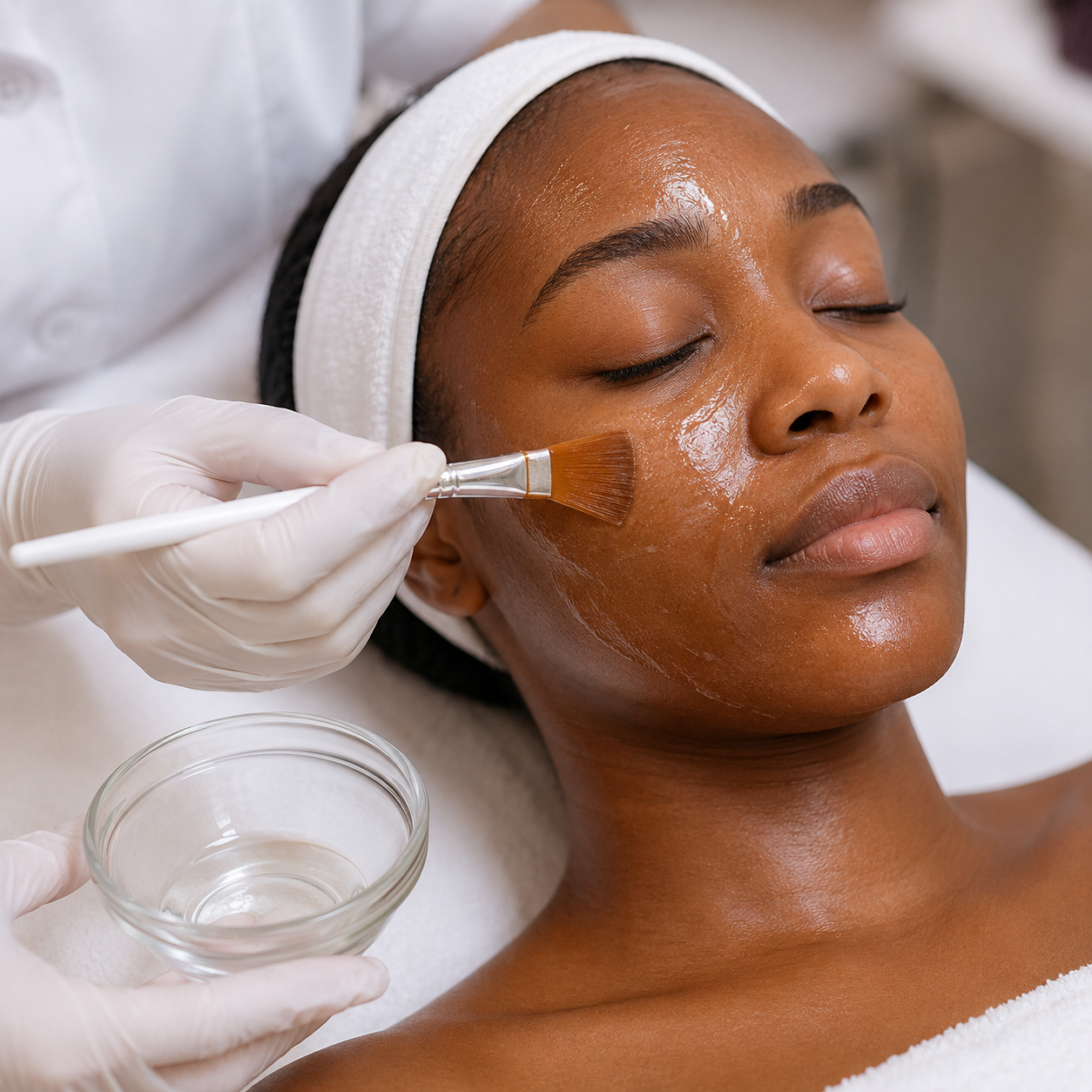
A chemical peel is a controlled skin-resurfacing treatment that uses carefully selected acids to help remove damaged surface cells and encourage healthier skin renewal.
Think of it as helping your skin do what it naturally wants to do.
Your skin is constantly shedding old cells and replacing them with new ones. When we’re younger, this process happens fairly efficiently. Over time, factors like sun exposure, hormones, acne, pollution, inflammation, and ageing can slow things down.
When that happens, skin may start looking:
- Dull
- Uneven
- Rough
- Congested
- Pigmented
- Tired
Chemical peels help accelerate skin turnover, allowing fresher, healthier-looking skin to come to the surface.
And here’s something many people don’t realise: Visible peeling isn’t always necessary for a peel to work. Some of today’s most advanced professional peels stimulate collagen production and skin renewal with little to no visible shedding at all. So if you’ve been imagining dramatic sheets of skin peeling away for days, you can officially remove that image from your mind. Modern chemical peels are far more sophisticated than most people realise.
Why Are Chemical Peels So Popular?
There aren’t many skincare treatments that have stood the test of time quite like chemical peels.
Trends come and go. Ingredients become social media celebrities and then quietly disappear a year later. Yet chemical peels have remained a staple in dermatology for decades for one simple reason: they work.
Depending on the peel selected, chemical peels may help improve:
- Acne and breakouts
- Blackheads and clogged pores
- Excess oil
- Post-acne marks
- Hyperpigmentation
- Melasma
- Uneven skin tone
- Fine lines
- Sun damage
- Rough texture
- Dull skin
That’s a pretty impressive list for a treatment that many people still misunderstand.
Another reason chemical peels remain so popular is that they can be tailored to different skin concerns. Two people can walk into the same consultation and leave with completely different treatment recommendations.
One person may be battling oily skin and recurring breakouts. Another may be frustrated by pigmentation that refuses to fade. Someone else may simply want brighter, smoother-looking skin.
The treatment approach would likely be different for all three.
That’s why there is no such thing as the “best chemical peel.” There’s only the best chemical peel for your skin concern, skin type, and treatment goals.
Not All Chemical Peels Are The Same
One of the biggest skincare mistakes people make is assuming all chemical peels do the same thing.
Imagine walking into a pharmacy and asking for medicine. The first question would be: medicine for what?
A headache?
An allergy?
A cold?
The answer matters.
The same principle applies to chemical peels. Different acids perform different functions. Some are better suited to acne-prone skin, while others focus on pigmentation, skin texture, fine lines, or overall skin rejuvenation.
Understanding the different types of chemical peels can make a huge difference when choosing a treatment, which is why it’s helpful to know what each peel was designed to do.
Some Of The Chemical Peels Available Through MD Dermoutlet And Our Dermatology Practice
One of the questions we hear most often is:
“Which chemical peel should I choose?”
The honest answer is that it depends on what you’re trying to achieve.
Acne doesn’t need the same treatment as melasma, and oily skin doesn’t behave the same way as sensitive skin. The peel that works beautifully for your friend may not be the one that’s best suited to you.
Here’s a closer look at some of the professional chemical peels available through MD Dermoutlet and our dermatology practice, along with the skin concerns they’re most commonly used to address.
Glycolic Acid Peels: The Glow-Getter
If glycolic acid had a personality, it would probably be the friend who convinces everyone to leave the house and enjoy life.
Glycolic Acid Peels are often chosen for patients who feel their skin has become dull, rough, or uneven. By encouraging healthy skin turnover, they can help improve radiance, smooth texture, and give tired-looking skin a fresher appearance.
They’re also frequently considered when early signs of ageing start appearing and the goal is healthier, brighter-looking skin.
Best for:
- Dull skin
- Uneven texture
- Mild pigmentation
- Fine lines
- Early signs of ageing
Salicylic Acid Peels: The Acne Specialist
If your pores could talk, they’d probably ask for salicylic acid.
Unlike many other acids, salicylic acid is oil-soluble, meaning it can penetrate into pores where excess oil, dead skin cells, and congestion accumulate. This is one of the reasons Salicylic Acid Peels remain a favourite for oily and acne-prone skin.
Patients dealing with recurring breakouts, blackheads, and stubborn congestion often find themselves being introduced to this peel sooner rather than later.
Best for:
- Acne
- Oily skin
- Blackheads
- Enlarged pores
Easy Azelaic Peel: The Multi-Tasker
Some skincare ingredients are specialists. Azelaic acid is more of an all-rounder.
It’s often considered when pigmentation, acne, redness, and sensitivity show up together, which is one reason it has become such a popular option for patients with darker skin tones. When someone is trying to tackle both breakouts and pigmentation at the same time, azelaic acid often earns a place in the conversation.
Best for:
- Melasma
- Hyperpigmentation
- Acne
- Rosacea
- Sensitive skin
NeoStrata Mandelic Clarity Peel: The Gentle Overachiever
Some skin types seem to react dramatically to almost everything. For those patients, mandelic acid can be a welcome surprise.
Because it penetrates the skin more gradually than glycolic acid, it tends to be gentler while still helping improve pigmentation, acne, and post-acne marks. It’s often considered for patients who want results without pushing their skin too far out of its comfort zone.
Best for:
- Sensitive skin
- Acne-prone skin
- Pigmentation
- Post-acne marks
- Darker skin tones
Mesoestetic Melanostop Peel: For Pigmentation That Refuses To Leave
If you’ve ever looked at a dark mark and thought,
“The pimple disappeared months ago. Why is the mark still here?”
you’re not alone.
Pigmentation has a habit of overstaying its welcome. Whether it’s triggered by acne, hormones, inflammation, or sun exposure, those stubborn patches can linger long after the original problem has disappeared.
The Mesoestetic Melanostop Peel was specifically developed to target abnormal pigment production and is frequently incorporated into treatment plans for melasma and resistant pigmentation. While no single treatment can magically erase pigmentation overnight, this peel is often considered when discoloration has become particularly difficult to manage.
Best for:
- Melasma
- Resistant pigmentation
- Sun-induced pigmentation
- Uneven skin tone
SkinCeuticals Pigment Balancing Peel: For Skin That Can’t Decide On One Shade
Pigmentation doesn’t always appear as one obvious patch.
Sometimes it’s a collection of old acne marks, areas of sun damage, and uneven skin tone that make the complexion look less uniform than you’d like.
The SkinCeuticals Pigment Balancing Peel was specifically designed to target visible discoloration while helping improve overall skin clarity. It’s often considered for patients whose primary goal is a brighter, more even-looking complexion.
Think of it as helping your skin move towards a more consistent tone rather than constantly fighting multiple shades across the face.
Best for:
- Hyperpigmentation
- Uneven skin tone
- Sun damage
- Post-acne marks
- Skin brightening
NeoStrata Retinol Peel: The Fast-Forward Button
Retinol has been one of dermatology’s favourite ingredients for years.
Why?
Because it rarely limits itself to solving just one problem.
The NeoStrata Retinol Peel takes the benefits of retinol and delivers them in a professional treatment designed to accelerate skin renewal. Patients often consider this peel when they’re trying to improve texture, fine lines, pigmentation, acne, and overall skin quality.
If Glycolic Acid Peels are the glow-getters, the NeoStrata Retinol Peel is the overachiever that insists on doing several jobs at once.
Best for:
- Fine lines
- Early signs of ageing
- Acne
- Post-acne marks
- Pigmentation
- Skin rejuvenation
Easy TCA®: When You Need More Than A Surface Refresh
Sometimes the goal isn’t simply brighter skin.
Sometimes the concern is acne scarring, deeper pigmentation, or visible signs of ageing that need a little more attention.
Easy TCA® provides deeper skin renewal than many superficial peels while maintaining an excellent safety profile when selected appropriately. It is often considered when patients are looking for more significant improvement in texture, pigmentation, and overall skin quality.
Best for:
- Acne scars
- Pigmentation
- Fine lines
- Skin rejuvenation
PRX-T33®: The Peel For People Who Don’t Want To Peel
PRX-T33® has earned itself a nickname in the skincare world: the no-peel peel.
And honestly, it’s easy to see why.
While traditional peels often work primarily on the surface of the skin, PRX-T33® focuses on stimulating collagen production deeper within the skin while causing minimal visible peeling. This makes it particularly appealing for patients who want rejuvenation without obvious downtime.
It’s often the treatment that catches people’s attention when they want fresher-looking skin but aren’t excited by the idea of walking around visibly peeling for several days.
Best for:
- Fine lines
- Dull skin
- Loss of firmness
- Skin rejuvenation
ROCQ TCA Peel: The Customisable Problem-Solver
Not every skin concern fits neatly into one category, which is where the ROCQ TCA Peel comes in. This versatile professional peel can be tailored according to individual skin goals, making it a popular option for patients dealing with a combination of concerns such as pigmentation, uneven texture, sun damage, and early signs of ageing. By encouraging healthy skin renewal, the ROCQ TCA Peel helps improve overall skin quality while supporting a smoother, more refined complexion.
Best for:
- Pigmentation
- Uneven skin texture
- Photoageing
- Sun-damaged skin
- Skin rejuvenation
- Fine lines and wrinkles
Other Professional Chemical Peels Available Through MD Dermoutlet
In addition to the peels discussed above, we also offer a range of specialised professional treatments, including:
- NeoStrata Clarifying Peel
- NeoStrata Brightening Peel
- Mesoestetic Advanced Eye Peel
The most appropriate peel depends on your skin type, skin tone, treatment goals, current skincare routine, and medical history. That’s why professional guidance remains important before starting any treatment programme.
Are Chemical Peels Safe For Darker Skin?
One of the biggest myths about chemical peels is that people with darker skin tones should avoid them.
Fortunately, that’s simply not true.
The concern usually comes from the fact that darker skin types are more prone to post-inflammatory hyperpigmentation. In other words, if the skin becomes irritated, it may respond by producing excess pigment.
That’s why choosing the right peel matters.
Today, many professional peels are routinely incorporated into treatment plans for patients with Fitzpatrick skin types IV, V, and VI. In fact, some peels are particularly useful when treating concerns that are common in darker skin tones, such as melasma and post-inflammatory hyperpigmentation.
Peels such as Easy Azelaic Peel, Salicylic Acid Peel, Mesoestetic Melanostop Peel, and NeoStrata Mandelic Clarity Peel are frequently considered because of their suitability for pigmentation-prone skin.
The goal is never to choose the strongest peel.
The goal is to choose the most appropriate peel.
So, Which Peel Might Be Right For You?
If you’re still wondering where you fit in, here’s a simplified guide.
If acne, blackheads, and oily skin are your biggest frustrations, Salicylic Acid Peels and NeoStrata Clarifying Peels are often among the treatments considered.
If pigmentation or melasma is your main concern, peels such as Easy Azelaic Peel and Mesoestetic Melanostop Peel are commonly incorporated into treatment plans.
If your skin simply feels dull and lacks radiance, Glycolic Acid Peels are often chosen to help improve brightness and texture.
For those concerned about fine lines, skin texture, and overall rejuvenation, treatments such as NeoStrata Retinol Peel and PRX-T33® are frequently discussed.
And if your skin tends to be sensitive, options such as Easy Azelaic Peel and NeoStrata Mandelic Clarity Peel may be considered because of their gentler profile.
Of course, skincare is rarely one-size-fits-all. Many people have more than one concern at the same time, which is why treatment plans are often personalised.
What Should You Expect After A Chemical Peel?
One of the biggest surprises for many first-time patients is how manageable recovery can be.
While downtime varies depending on the peel selected, most people experience only mild redness, tightness, dryness, or light flaking.
Some peels involve little to no visible peeling at all, while others may cause more noticeable shedding over a few days.
Your aftercare routine plays an important role in your results. Gentle skincare, moisturising regularly, and daily sunscreen use are essential following any professional peel treatment.
How Many Treatments Will I Need?
Many people notice that their skin looks brighter and fresher after a single treatment. However, most skin concerns require a series of treatments for optimal results. Acne, pigmentation, melasma, and signs of ageing all develop over time, so meaningful improvement usually requires consistency. Think of chemical peels the same way you think about exercise.
One gym session is great. A structured programme is where the real transformation happens. The exact number of treatments required depends on your skin concern, the peel selected, and your individual treatment goals.
Ready To Explore Chemical Peels?
Whether you’re dealing with acne, pigmentation, melasma, post-acne marks, dull skin, or early signs of ageing, chemical peels remain one of the most versatile professional treatments available.
At MD Dermoutlet, we offer a carefully selected range of professional chemical peels and skincare solutions designed to address a variety of skin concerns.
Not sure where to start?
Contact our team before purchasing. A quick discussion can help ensure you’re choosing the treatment that best matches your skin type, concerns, and goals.
Because when it comes to chemical peels, success isn’t about choosing the strongest treatment.
It’s about choosing the right one.
References
- Chemical Peels for Skin Resurfacing. StatPearls Publishing.
- Soleymani T, Lanoue J, Rahman Z. A Practical Approach to Chemical Peels: A Review of Fundamentals and Step-by-Step Algorithmic Protocol for Treatment.
- Khunger N. Standard Guidelines of Care for Chemical Peels. Indian Journal of Dermatology, Venereology and Leprology.
- Sarkar R, Bansal S, Garg VK. Chemical Peels for Melasma in Darker Skin Types: A Review.
- Fischer TC, Perosino E, Poli F, et al. Chemical Peels in Aesthetic Dermatology: An Update.
- American Academy of Dermatology Association. Chemical Peel Treatment Information.
- Mesoestetic Pharma Group. Professional Peel Clinical Information.
- NeoStrata Professional. Clinical Peel Information.
- SkinCeuticals Professional Treatments. Clinical Treatment Information.
Like & Share