



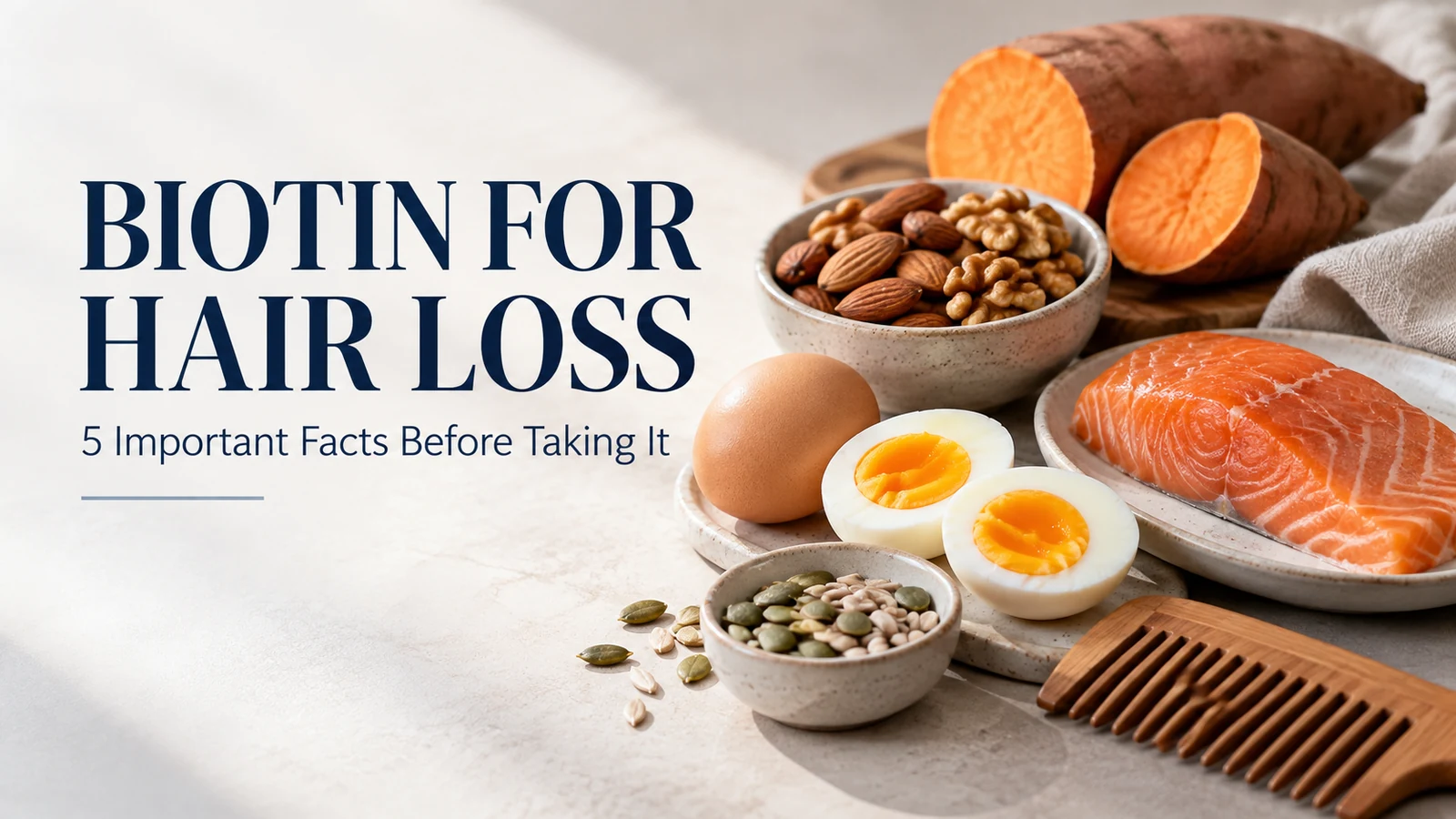
Biotin for hair loss is widely promoted in hair, skin and nail supplements, often at doses far higher than our daily nutritional requirements. But does taking extra biotin actually improve hair growth?
Reviewed by Dr Matete Mathobela – Specialist Dermatologist · Read more about Dr Matete Mathobela →
Medical disclaimer: This article is for educational purposes and does not replace individual medical advice. Persistent or unexplained hair loss should be assessed by a qualified healthcare professional.
Biotin, also known as vitamin B7, is essential for normal metabolism and healthy hair. However, research does not support routinely taking high-dose biotin for hair loss in people without a deficiency. High doses can also interfere with certain blood tests, potentially producing misleading results.
In a Nutshell
- Biotin deficiency is uncommon, but correcting a confirmed deficiency may help restore healthy hair growth.
- High-dose biotin is not established as an effective hair-loss treatment in people without deficiency.
- Biotin supplements can interfere with some blood tests, including thyroid and troponin assays.
- Diagnosis of the cause of hair loss matters more than selecting a supplement.
On This Page
- 1. Does Biotin for Hair Loss Actually Work?
- 2. Who Is at Risk of Biotin Deficiency?
- 3. Can You Get Enough Biotin From Food?
- 4. Can Biotin Supplements Affect Blood Tests?
- 5. Should You Take Biotin for Hair Loss?
1. Does Biotin for Hair Loss Actually Work?
Biotin deficiency can cause hair thinning, so correcting a genuine deficiency may help restore normal hair growth.
However, biotin deficiency is uncommon, and there is little convincing evidence that supplementation improves hair growth in people who already have adequate biotin levels.
A 2024 review found limited high-quality evidence supporting biotin supplementation for hair growth in people without deficiency.
The takeaway: Biotin is essential for healthy hair, but more biotin does not necessarily mean more hair growth.
2. Who Is at Risk of Biotin Deficiency?
Although uncommon, deficiency may occur in people with certain inherited metabolic disorders, significant nutritional problems or prolonged consumption of large amounts of raw egg whites.
If deficiency is suspected, identifying and addressing the underlying cause is more important than automatically starting high-dose supplements.
3. Can You Get Enough Biotin From Food?
For most people, yes.
Good dietary sources include cooked eggs, liver, fish, meat, nuts, seeds and sweet potatoes.
Adults generally require approximately 30 micrograms (µg) daily, which most people can obtain through a varied diet.
Interestingly, consuming large quantities of raw egg whites over time can reduce biotin absorption because they contain avidin, a protein that binds biotin. Cooking denatures avidin.
4. Can Biotin Supplements Affect Blood Tests?
Yes. This is one of the most important risks associated with high-dose biotin supplements.
Biotin can interfere with certain laboratory immunoassays, causing results to appear falsely high or falsely low, depending on the test.
Examples include:
- Thyroid function tests
- Troponin tests used to assess possible heart injury
- Certain hormone tests
- Parathyroid hormone tests
The US Food and Drug Administration (FDA) has warned that biotin interference may cause falsely low troponin results, potentially delaying recognition of a serious cardiac problem.
If you take a hair, skin and nail supplement, check its biotin content and inform your doctor and laboratory before blood testing. The appropriate withholding period depends on the dose and specific laboratory assay.
5. Should You Take Biotin for Hair Loss?
Before taking biotin for hair loss, ask a more important question:
What is causing the hair loss?
Androgenetic alopecia, telogen effluvium, traction alopecia, alopecia areata and scarring alopecias have different underlying mechanisms and require different treatment approaches.
Taking high-dose biotin without addressing the underlying cause may delay appropriate treatment.
Dermatologist’s Perspective
I do not routinely recommend high-dose biotin for hair loss simply because someone is experiencing thinning or shedding.
Biotin deficiency should be corrected when present. However, there is currently insufficient evidence that taking additional biotin improves hair growth in people who are already biotin-sufficient.
Persistent hair loss deserves a diagnosis, not simply another supplement.
Concerned about persistent hair loss or excessive shedding? Learn more about consulting Dr Matete Mathobela for an individualised assessment and evidence-based treatment.
Supportive Hair and Scalp Care
If you are dealing with thinning or shedding, choose gentle hair care while the underlying cause is assessed. Shampoo and conditioner can improve cleansing and manageability, but they are not substitutes for medical treatment or evidence that biotin supplementation works.


Frequently Asked Questions
Does biotin make hair grow faster?
There is insufficient evidence that biotin supplementation accelerates hair growth in people without biotin deficiency.
How much biotin do adults need?
The adequate intake for most adults is approximately 30 µg daily.
Should I stop taking biotin before blood tests?
Tell your healthcare professional and laboratory that you take biotin. They can advise whether it needs to be withheld and for how long, depending on the test and dose.
Is biotin deficiency a common cause of hair loss?
No. True biotin deficiency is uncommon. Other causes of hair loss are considerably more common.
Related Articles
- Hair Loss Medications: 4 Proven Options Explained by a Dermatologist
- The Science of Stress and Hair Loss
- Struggling with Hair Loss? 2 Dermatologist-Approved Shampoos That Can Help
References
- Patel DP, Swink SM, Castelo-Soccio L. A Review of the Use of Biotin for Hair Loss. Skin Appendage Disorders. 2017. Read the source
- Yelich A, Jenkins H, Holt S, Miller R. Biotin for Hair Loss: Teasing Out the Evidence. Journal of Clinical and Aesthetic Dermatology. 2024. Read the source
- NIH Office of Dietary Supplements. Biotin Fact Sheet for Health Professionals. Read the source
- US Food and Drug Administration. Biotin Interference with Troponin Lab Tests. Read the source