



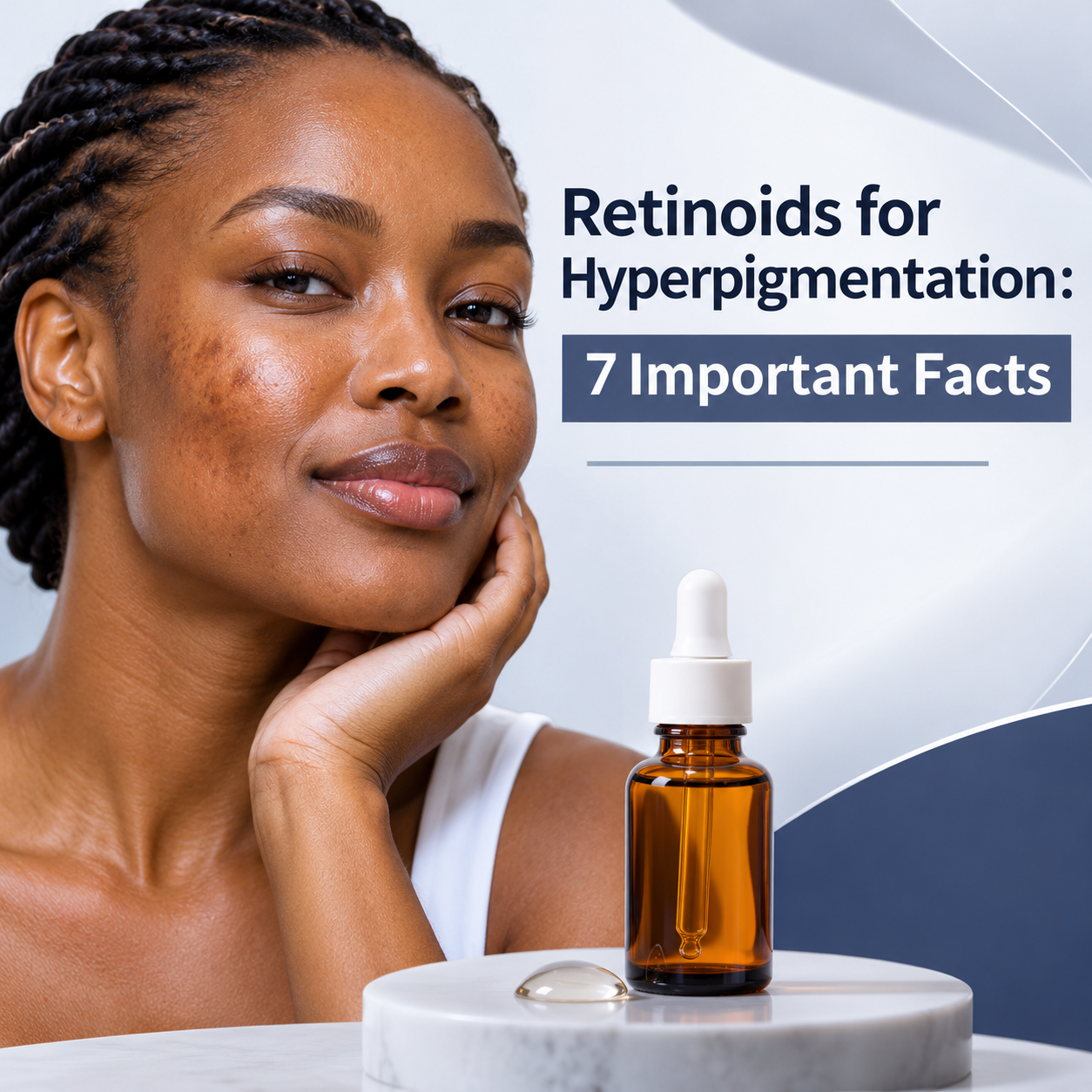
Reviewed by Dr Matete Mathobela – Specialist Dermatologist practising in Century City, Cape Gate Mediclinic and Life West Coast Private Hospital. Founder of MD Cosmeceuticals by Matete Derma and MD DermOutlet. Read more about Dr Matete Mathobela →
Medical Disclaimer: This article is for educational purposes and does not replace personalised medical advice. Prescription retinoids, including oral isotretinoin, require medical supervision. Retinoids should be avoided during pregnancy and when planning pregnancy.
Retinoids for hyperpigmentation can help dark marks, yet irritation or ongoing sun exposure may undermine progress. In some cases, increased contrast with the surrounding skin makes pigmentation more apparent without new pigment developing.
In a Nutshell
- Retinoids can improve acne-related dark marks and certain pigmentation concerns.
- Excessive irritation can trigger post-inflammatory hyperpigmentation (PIH), particularly in darker skin.
- Inadequate sun protection may worsen existing pigmentation and undermine treatment.
- Retinoids may brighten surrounding skin, making previously unnoticed pigmentation more visible.
- Pigmentation appearing more obvious does not always mean that treatment is making it worse.
In This Guide
- 1. How Do Retinoids Improve Hyperpigmentation?
- 2. Why Can Retinoids Make Pigmentation Worse?
- 3. Can Retinoids Unmask Existing Pigmentation Disorders?
- 4. Does Increased Cell Turnover Make Skin More Sun-Sensitive?
- 5. Can Skipping Sunscreen Worsen Pigmentation?
- 6. How Can You Use Retinoids More Safely in Darker Skin?
- 7. What Should You Do if Pigmentation Becomes More Noticeable?
Can Retinoids Make Hyperpigmentation Worse?
To assess a change in pigmentation, distinguish inflammation-induced PIH from sun-related darkening and changes in contrast with the surrounding skin.
Retinoids are widely used to treat acne, photoageing and uneven pigmentation. Yet some patients notice that dark marks become more obvious after starting treatment.
Can retinoids make hyperpigmentation worse?
Yes, but there are several possible explanations.
Excessive irritation may cause new pigmentation. Inadequate sun protection may darken existing marks. Alternatively, improvements in the surrounding skin tone may make previously existing pigmentation more noticeable.
Understanding the difference is particularly important in patients with darker skin tones.
1. How Do Retinoids Improve Hyperpigmentation?
Retinoids influence epidermal differentiation, skin-cell turnover and the distribution of melanin within the epidermis.
Prescription retinoids such as tretinoin and adapalene also help control acne, reducing the development of new acne-related dark marks.
A 2024 systematic review examining treatments for PIH in skin of colour found that topical retinoids were among the frequently studied interventions.
Clinical improvement was reported, although responses varied and complete clearance was not guaranteed.
For information about a formulation available at MD DermOutlet, see MD Retinoid Cream: How This Advanced Retinoid Works.
2. Why Can Retinoids Make Pigmentation Worse?
Retinoids may cause dryness, redness, stinging and peeling, especially during treatment initiation.
When irritation becomes excessive, inflammation may stimulate pigment production and contribute to PIH.
This is particularly important for patients with darker skin tones, where inflammatory marks may persist for months.
Combining retinoids with aggressive exfoliation, strong acids or unsuitable skincare products may increase irritation.
Dermatologist Insight: A retinoid does not need to cause burning or dramatic peeling to work. Repeated inflammation may undermine the treatment of pigmentation.
3. Can Retinoids Unmask Existing Pigmentation Disorders?
Yes, this is another possible explanation for pigmentation becoming more noticeable.
Retinoids can improve overall skin tone and brightness through effects on epidermal turnover and melanin distribution.
Patients starting retinoids are also commonly advised to begin using sunscreen consistently.
Together, these measures may gradually reduce uneven tanning and improve the appearance of the surrounding skin.
If an existing pigmentation disorder improves more slowly than the surrounding skin, its borders or distribution may become more apparent.
This does not necessarily mean the pigmentation disorder has worsened.
What Does the Research Show?
A 2024 study published in the Journal of the European Academy of Dermatology and Venereology investigated topical retinoids in photoaged Black skin.
Researchers found that tretinoin and retinol produced changes in epidermal structure and melanin distribution, accompanied by modest but measurable skin lightening.
The findings support the biological basis for retinoid-related brightening.
However, the study did not directly investigate the clinical unmasking of pigmentation disorders. Increased contrast between surrounding skin and a pre-existing pigmentary lesion remains a plausible clinical explanation rather than a proven outcome of that study.
Evidence note: The 2024 study documented small changes in surrounding skin pigmentation; it did not demonstrate that retinoids clinically “unmask” pigmentary disorders.
Dermatologist Insight
When patients report darker or more noticeable pigmentation after beginning retinoids, consider three possibilities:
- True worsening: Retinoid-induced inflammation has triggered PIH.
- Sun-related worsening: Continued UV or visible-light exposure has aggravated pigmentation.
- Unmasking: The surrounding skin has become brighter, increasing contrast with a previously existing pigmentary disorder.
Distinguishing these possibilities may prevent unnecessary discontinuation of an otherwise effective treatment.
4. Does Increased Cell Turnover Make Skin More Sun-Sensitive?
Retinoids increase epidermal turnover and influence skin-cell differentiation.
During the initial treatment period, dryness, superficial peeling and temporary barrier changes may make skin feel more sensitive.
However, increased turnover does not automatically mean that topical retinoids cause true UV-induced photosensitivity.
Controlled studies of tretinoin have not consistently demonstrated phototoxicity or photoallergy.
Nevertheless, ongoing sun exposure can worsen pigmentation independently of the retinoid.
The recommendation to use sunscreen remains important, even when the retinoid itself is well tolerated.
5. Can Skipping Sunscreen Worsen Pigmentation?
Yes.
Ultraviolet radiation can stimulate pigmentation, while visible light can contribute to persistent pigmentation, particularly in melasma and darker skin tones.
Even when retinoids are improving the skin, inadequate photoprotection may delay progress or darken existing marks.
What About Oral Isotretinoin?
Patients taking oral isotretinoin commonly experience dryness and increased skin fragility, and some report heightened sun sensitivity.
However, evidence of consistent, objectively measurable isotretinoin-induced UV photosensitivity is limited.
Sun exposure, inflammatory acne and skin irritation may all contribute to persistent pigmentation during treatment.
Oral isotretinoin does not automatically cause dark marks simply because sunscreen is omitted.
How Should You Protect Your Skin?
Use broad-spectrum SPF 50+ sunscreen daily.
Reapply approximately every two hours during prolonged outdoor exposure and after swimming or substantial sweating.
Use shade, protective clothing and hats.
For melasma or visible-light-sensitive pigmentation, tinted sunscreen containing iron oxides may offer additional protection.
Learn more about pigmentation in skin of colour and choosing sunscreen for oily or acne-prone skin.
6. How Can You Use Retinoids More Safely in Darker Skin?
Start gradually. Introduce suitable cosmetic retinoids a few evenings weekly, increasing according to tolerance. Follow the prescribed regimen for medicinal retinoids.
Moisturise consistently. Barrier-supporting moisturisers may reduce dryness and irritation.
Avoid over-exfoliation. Combining several irritating active ingredients can increase inflammation.
Treat underlying acne. Preventing new inflammatory lesions helps reduce new PIH.
Use sunscreen daily. Photoprotection supports pigmentation management and reduces UV-related darkening.
Related reading: Bakuchiol vs Retinol and Why Healthy Skin Starts with Your Skin Barrier.
7. What Should You Do if Pigmentation Becomes More Noticeable?
Do not automatically assume the retinoid is causing new pigmentation.
Consider whether the skin has developed irritation, whether existing pigmentation is being aggravated by sun exposure, or whether the surrounding skin is becoming lighter.
A dermatologist can assess the distribution of pigmentation, review previous photographs and identify underlying conditions such as melasma or PIH.
If significant dermatitis is present, the topical retinoid regimen may need adjustment.
The correct response depends on the cause of the pigmentation, not simply how dark it appears.
Looking for Skincare for Hyperpigmentation?
MD DermOutlet offers dermatologist-curated skincare products for pigmentation-prone skin, including sunscreens, moisturisers and targeted pigmentation treatments.
For persistent pigmentation or suspected underlying pigmentary disorders, a dermatologist can help determine whether prescription treatment or an in-clinic procedure is appropriate. Explore a dermatology consultation →
Products and procedures should be selected according to individual skin concerns. Not all pigmentation disorders respond to the same treatment.
Related Products at MD DermOutlet
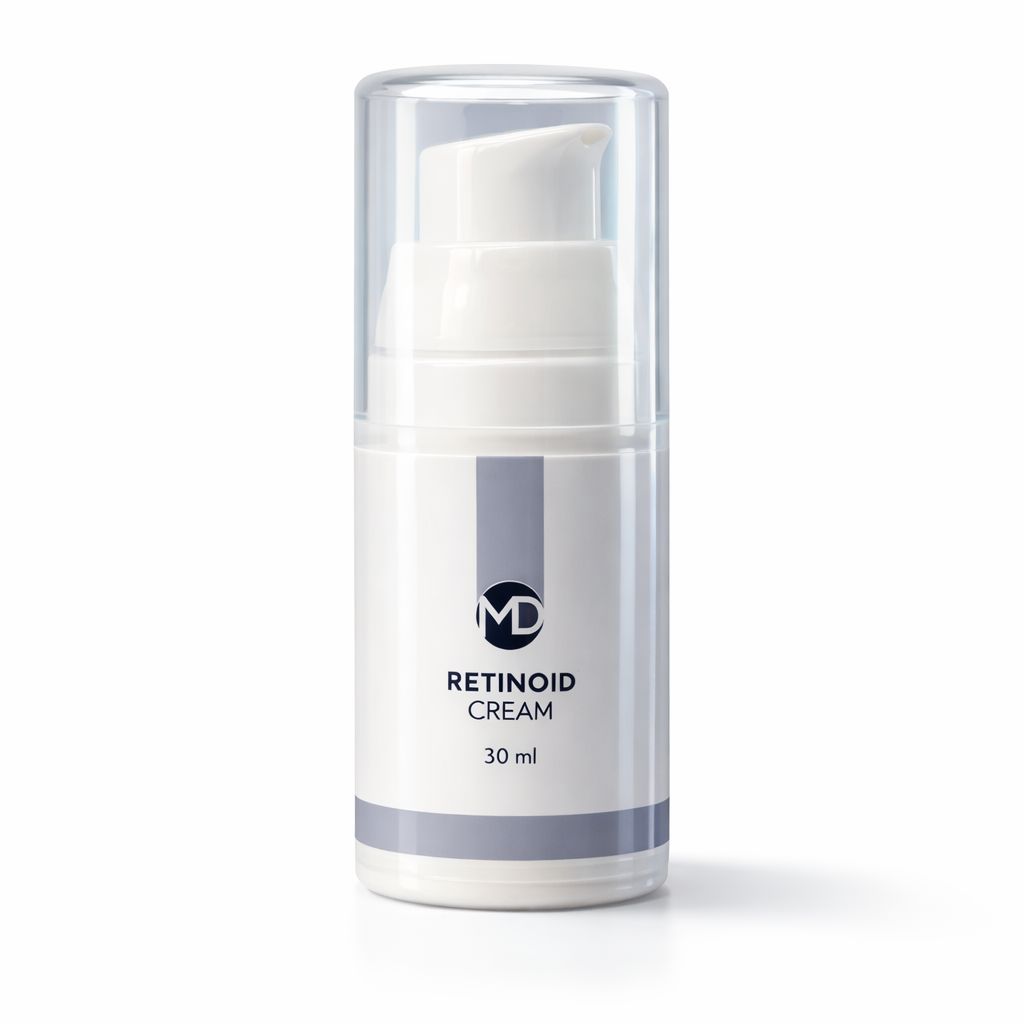
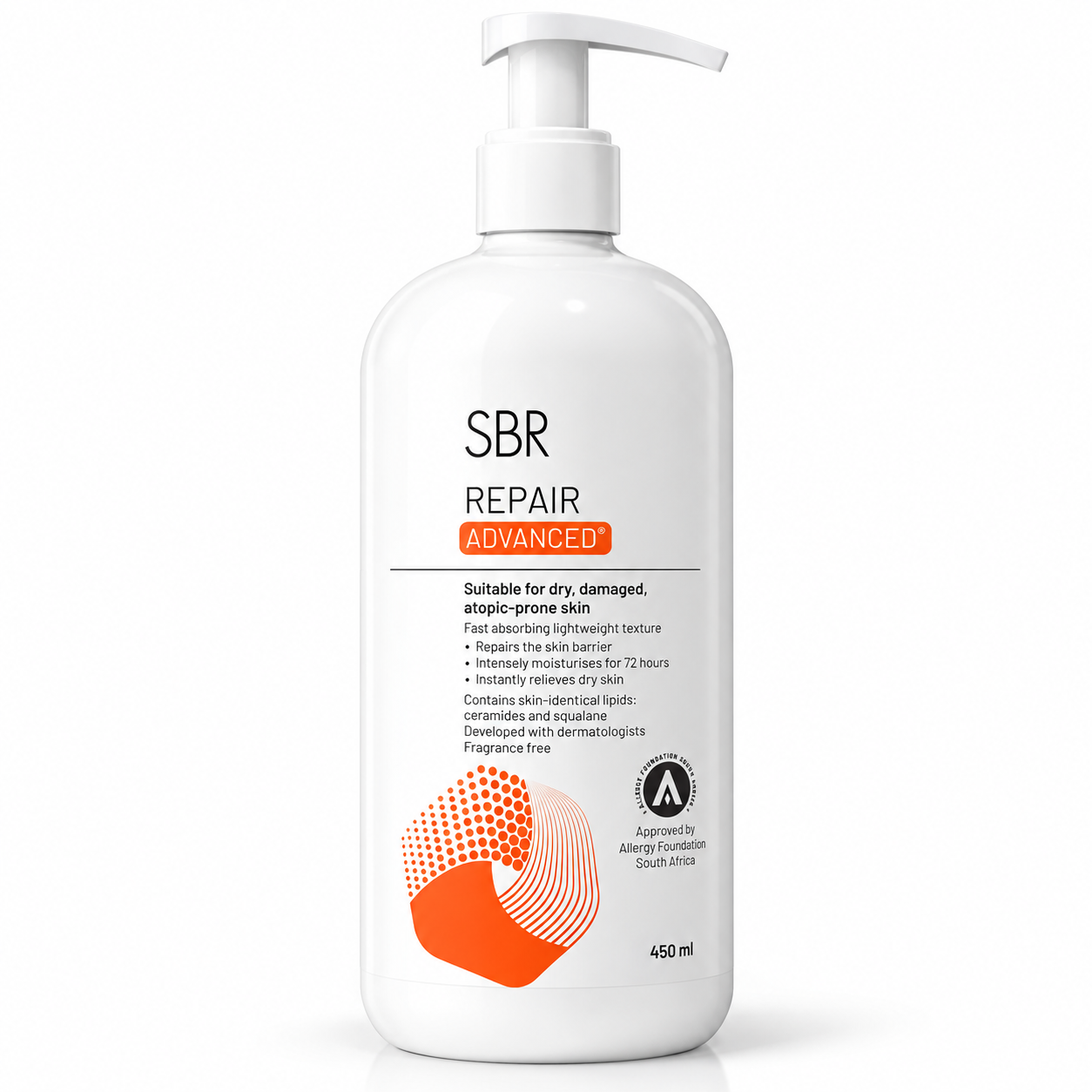
The following are catalogue examples for retinoid treatment, sun protection and skin-barrier support. They are not interchangeable and do not all suit every pigmentation disorder or patient. Use according to individual clinical guidance.

Where to Buy Dermatologist-Recommended Skincare →
Frequently Asked Questions
Do Retinoids Cause Hyperpigmentation?
Retinoids can improve pigmentation, but excessive irritation may trigger PIH.
Can Retinoids Reveal Pigmentation That Was Already There?
Possibly. Improvements in surrounding skin tone may increase the contrast of an existing pigmentary disorder, making it more noticeable without necessarily worsening it.
Does Tretinoin Make Skin More Sensitive to the Sun?
Tretinoin may cause dryness and irritation that make skin feel sensitive, but controlled studies have not consistently demonstrated true UV phototoxicity.
Can Oral Isotretinoin Make Dark Marks Worse?
Persistent acne inflammation, skin irritation and unprotected sun exposure may contribute to pigmentation during isotretinoin treatment. Isotretinoin itself does not necessarily directly cause dark marks.
Can I Use Retinoids Without Sunscreen?
This is not recommended, particularly when managing pigmentation. Sun exposure may worsen existing dark marks and undermine treatment.
Is Tinted Sunscreen Better for Hyperpigmentation?
For melasma and pigmentation affected by visible light, tinted sunscreens containing iron oxides may provide additional protection beyond UV filters alone.
Final Thoughts
Retinoids for hyperpigmentation can be beneficial, but pigmentation becoming more noticeable does not always mean treatment has failed.
Some patients develop true PIH from irritation. Others experience worsening from continued sun exposure. In some cases, existing pigmentation becomes more visible as surrounding skin tone improves.
Recognising these differences is essential to selecting appropriate treatment.
For patients with darker skin tones, the goal is to improve pigmentation while minimising inflammation, supporting the skin barrier and maintaining consistent photoprotection.
Suggested Reading
- MD Retinoid Cream: How This Advanced Retinoid Works
- Bakuchiol vs Retinol: Is the Natural Alternative as Effective?
- Pigmentation in Skin of Colour: Why Dark Marks Last Longer
- 7 Effective Hyperpigmentation Treatments in South Africa
- MD Cosmeceuticals Pigmentation Routine
Scientific References
- Halai P, et al. (2024). Retinoids in the Treatment of Photoageing: A Histological Study of Topical Retinoid Efficacy in Black Skin. JEADV. Read research →
- Mar K, et al. (2024). Treatment of Post-Inflammatory Hyperpigmentation in Skin of Colour: A Systematic Review. J Cutan Med Surg. Read research →
- Callender VD, et al. (2022). Effects of Topical Retinoids on Acne and Post-inflammatory Hyperpigmentation in Patients with Skin of Color. Am J Clin Dermatol. Read research →
- Slade HB, et al. (2009). Reappraising the Phototoxicity of Tretinoin: A Report of Four Controlled Clinical Trials. Photodermatol Photoimmunol Photomed. Read research →
- Fatima S, et al. (2020). The Role of Sunscreen in Melasma and Postinflammatory Hyperpigmentation. Indian J Dermatol. Read research →
- Davis EC, Callender VD. (2010). Postinflammatory Hyperpigmentation: A Review of the Epidemiology, Clinical Features, and Treatment Options in Skin of Color. J Clin Aesthet Dermatol. Read research →