



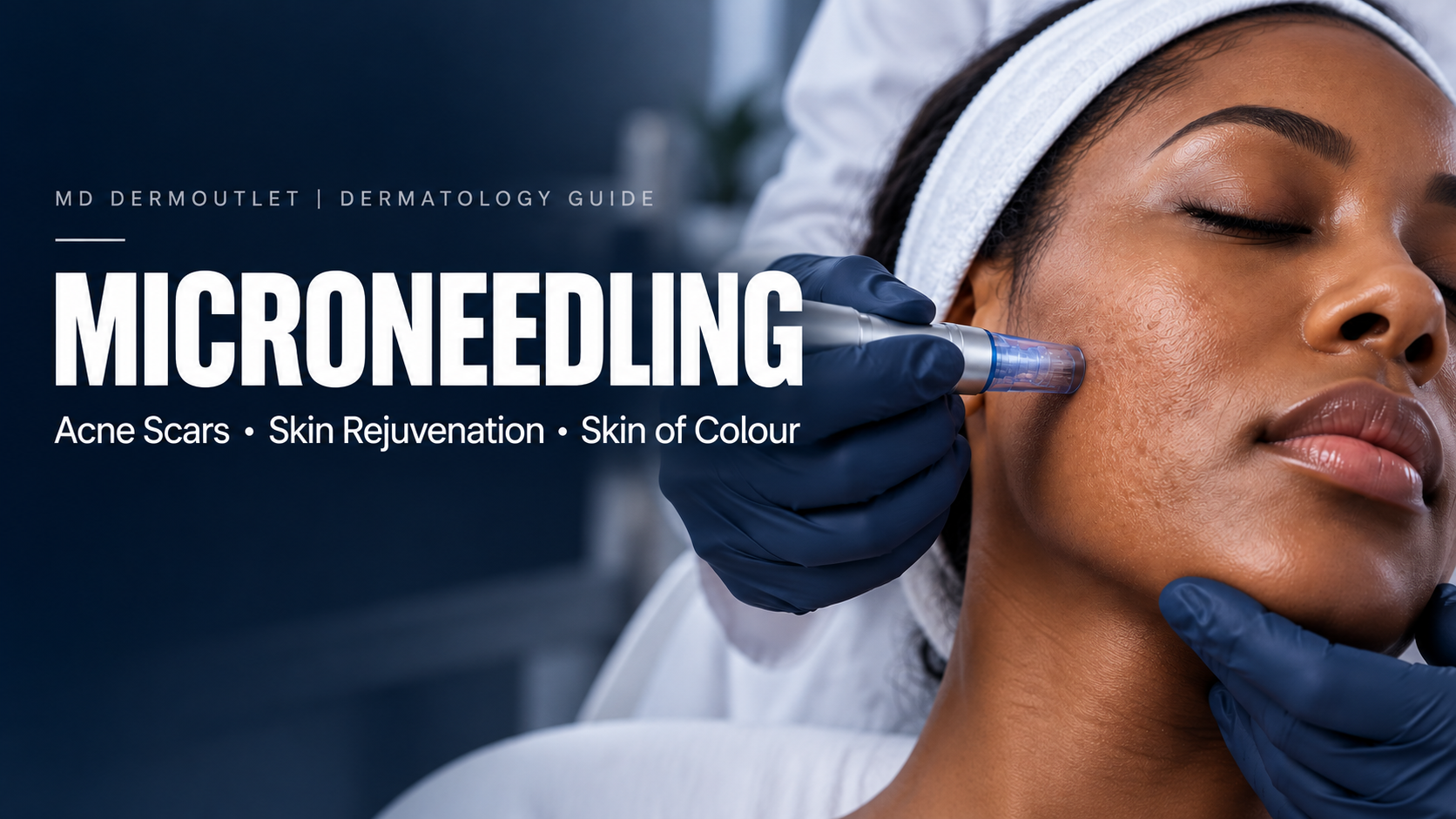
Microneedling is a controlled collagen-induction procedure used for selected atrophic acne scars, uneven texture and skin-rejuvenation concerns. Its suitability depends on scar type, skin condition and the risk of pigmentary changes, particularly in skin of colour.
Reviewed by Dr Matete Mathobela – Specialist Dermatologist. Read more about Dr Matete Mathobela →
Medical disclaimer: This article is general educational information, not individual treatment advice. Microneedling can cause infection, irritation, scarring and post-inflammatory hyperpigmentation. Treatment suitability, preparation and aftercare must be individualised by an appropriately qualified practitioner.
Could Microneedling Be the Treatment Your Skin Needs?
Acne scars that remain long after breakouts have cleared. Enlarged pores that seem increasingly noticeable. Fine lines and uneven skin texture that skincare alone cannot fully address.
These are some of the concerns that lead patients to consider microneedling.
Also known as collagen induction therapy, microneedling is a dermatological procedure that works by stimulating the skin’s natural repair mechanisms.
Unlike treatments that primarily exfoliate the surface, microneedling creates controlled micro-injuries that initiate wound healing and collagen remodelling.
The procedure has become increasingly popular because of its versatility, relatively short recovery period and suitability for a range of skin types.
However, microneedling is not suitable for every skin concern, and achieving good results requires more than simply stimulating collagen.
Understanding your skin condition, its underlying causes and the risk of pigmentary complications is essential.
In a Nutshell
- The treatment: Microneedling is a minimally invasive procedure that creates controlled microscopic injuries in the skin to stimulate wound healing and collagen remodelling.
- The benefits: It may improve atrophic acne scars, uneven texture, fine lines and selected stretch marks.
- Skin of colour: Microneedling is an option for many patients with darker skin tones, although post-inflammatory hyperpigmentation remains a potential complication.
- The results: Improvements develop gradually, often requiring multiple treatment sessions.
- The dermatologist’s view: Good results depend on selecting the right patient, preparing the skin appropriately and following a suitable aftercare programme.
In This Guide
- What Is Microneedling?
- How Does Microneedling Work?
- What Are the Benefits of Microneedling?
- Is Microneedling Safe for Dark Skin?
- Who Is a Good Candidate for Microneedling?
- How Should You Prepare Your Skin Before Microneedling?
- When Should Microneedling Be Avoided?
- What Happens During a Microneedling Treatment?
- How Many Microneedling Sessions Will I Need?
- When Will Results Become Visible?
- Microneedling vs Chemical Peels: What’s the Difference?
- Microneedling vs Laser Treatments
- Can Microneedling Be Combined With Other Treatments?
- Microneedling Aftercare: How to Protect Your Results
- Frequently Asked Questions About Microneedling
- Microneedling Packages Available Through MD DermOutlet
What Is Microneedling?
Microneedling involves using a device fitted with fine, sterile needles to create controlled microscopic punctures in the skin.
These micro-injuries activate the skin’s repair processes, including fibroblast activity and extracellular matrix remodelling.
The resulting wound-healing response may encourage the formation and reorganisation of collagen, improving certain aspects of skin structure and texture over time.
The treatment can be adjusted according to the area being treated, skin condition, depth of concern and individual risk factors.
How Does Microneedling Work?
The process involves three overlapping phases of wound healing.
1. Inflammatory phase
Immediately after treatment, inflammatory mediators and growth factors initiate the repair process.
2. Proliferative phase
Fibroblasts become active and participate in producing extracellular matrix components, including collagen.
3. Remodelling phase
Over the following weeks and months, collagen undergoes maturation and reorganisation.
This gradual remodelling explains why improvements in acne scars and skin texture can continue after the initial redness and swelling have resolved.
Dermatologist Insight
Microneedling does not simply increase collagen overnight. Its benefits develop through biological repair processes that take time.
The severity and type of skin concern, treatment technique and individual healing response all influence the outcome.
What Are the Benefits of Microneedling?
1. Microneedling for Acne Scars
One of the best-supported dermatological applications of microneedling is the treatment of atrophic acne scars.
These scars develop when inflammation associated with acne damages the skin’s supporting collagen structures.
Microneedling may improve the appearance of:
- Rolling acne scars
- Selected boxcar scars
- Mild to moderate atrophic acne scars
By stimulating dermal remodelling, the procedure can gradually improve certain depressed scars and surrounding skin texture.
However, not all acne scars respond equally.
Deep ice-pick scars, tethered scars and complex scarring may require additional interventions such as subcision, TCA CROSS, laser resurfacing or other scar-specific procedures.
Dermatologist Insight
Successful acne scar treatment begins with identifying the type of scar.
A patient with predominantly rolling scars may require a different treatment approach from someone with deep ice-pick scars. Microneedling is often one component of a broader scar-management plan rather than a complete treatment for every scar type.
2. Skin Rejuvenation and Fine Lines
Microneedling may improve certain early signs of skin ageing by stimulating collagen remodelling.
Potential improvements include:
- Fine lines
- Mild textural irregularities
- Skin firmness
- Overall skin smoothness
The degree of improvement varies, and results are generally more modest than those achievable with more intensive resurfacing procedures for advanced photoageing or deeper wrinkles.
3. Enlarged Pores
Pores are normal anatomical structures, and their size is influenced by genetics, sebaceous activity, age and changes in surrounding skin support.
Microneedling may improve the appearance of enlarged pores in selected patients by improving skin texture and dermal support.
However, it cannot permanently eliminate pores or change their fundamental anatomy.
Patients with oily or acne-prone skin may also benefit from treatments directed at sebum production and comedonal acne.
4. Stretch Marks
Stretch marks, or striae distensae, develop when the skin’s dermal supporting structures undergo changes associated with stretching and hormonal or other influences.
Microneedling has been investigated for improving the appearance of stretch marks through collagen remodelling.
Several treatment sessions may be required, and complete removal should not be expected.
Response can vary according to whether stretch marks are relatively new or longstanding, their severity and the patient’s individual healing characteristics.
5. Selected Pigmentation Concerns
Microneedling has also been investigated as an adjunctive treatment for certain pigmentary disorders, including melasma.
However, the evidence is more heterogeneous than for atrophic acne scars.
In patients with melasma, needling-induced inflammation may potentially aggravate pigmentation if treatment is not carefully selected and performed.
Microneedling should not automatically be considered a first-line treatment for melasma or post-inflammatory hyperpigmentation.
For many patients, appropriate topical treatment and consistent photoprotection remain more important.
Is Microneedling Safe for Dark Skin?
This is an especially important consideration for South African patients.
Individuals with Fitzpatrick skin types IV, V and VI may be more susceptible to post-inflammatory hyperpigmentation following skin injury or inflammation.
Microneedling is often considered a suitable treatment option for skin of colour because conventional mechanical needling does not depend on a chromophore-targeting laser or deliver the same type of thermal injury as many energy-based procedures.
Nevertheless, it still produces controlled skin injury, and pigmentary complications remain possible.
Potential risks include:
- Post-inflammatory hyperpigmentation
- Prolonged erythema
- Irritation
- Infection
- Scarring
- Temporary worsening of existing pigmentation
The risk is influenced by treatment depth, technique, skin condition, photoprotection and aftercare.
Dermatologist Insight: Treating Skin of Colour
When treating darker skin tones, I consider the risk of pigmentation complications alongside the intended treatment benefits.
Controlling existing inflammation, evaluating the skin barrier and planning appropriate photoprotection can be as important as the microneedling procedure itself.
A treatment that improves skin texture but triggers significant post-inflammatory hyperpigmentation may produce an unsatisfactory overall result.
Who Is a Good Candidate for Microneedling?
You may be a suitable candidate if you are concerned about:
- Atrophic acne scars
- Uneven skin texture
- Selected enlarged pores
- Fine lines
- Early signs of skin ageing
- Certain stretch marks
- Selected skin rejuvenation concerns
Suitability depends on your diagnosis, medical history, current skincare routine and treatment expectations.
A consultation helps determine whether microneedling is the most appropriate option or whether another treatment may deliver better results.
How Should You Prepare Your Skin Before Microneedling?
Good preparation can improve treatment tolerability and help reduce avoidable complications.
1. Prioritise Sunscreen
Consistent photoprotection is particularly important before skin procedures.
Ultraviolet radiation can increase pigmentation, while visible light may contribute to persistent pigmentation in susceptible individuals, particularly those with darker skin tones.
Broad-spectrum sunscreen is recommended.
For patients with melasma or pigmentary concerns, tinted sunscreens containing iron oxides may provide additional protection against visible-light-induced pigmentation.
A Sunscreen Option for Pre-Treatment Photoprotection
Consistent sunscreen use is important before procedures, particularly for patients prone to pigmentation. This is an example available from the MD DermOutlet catalogue; sunscreen choice should still suit the individual.
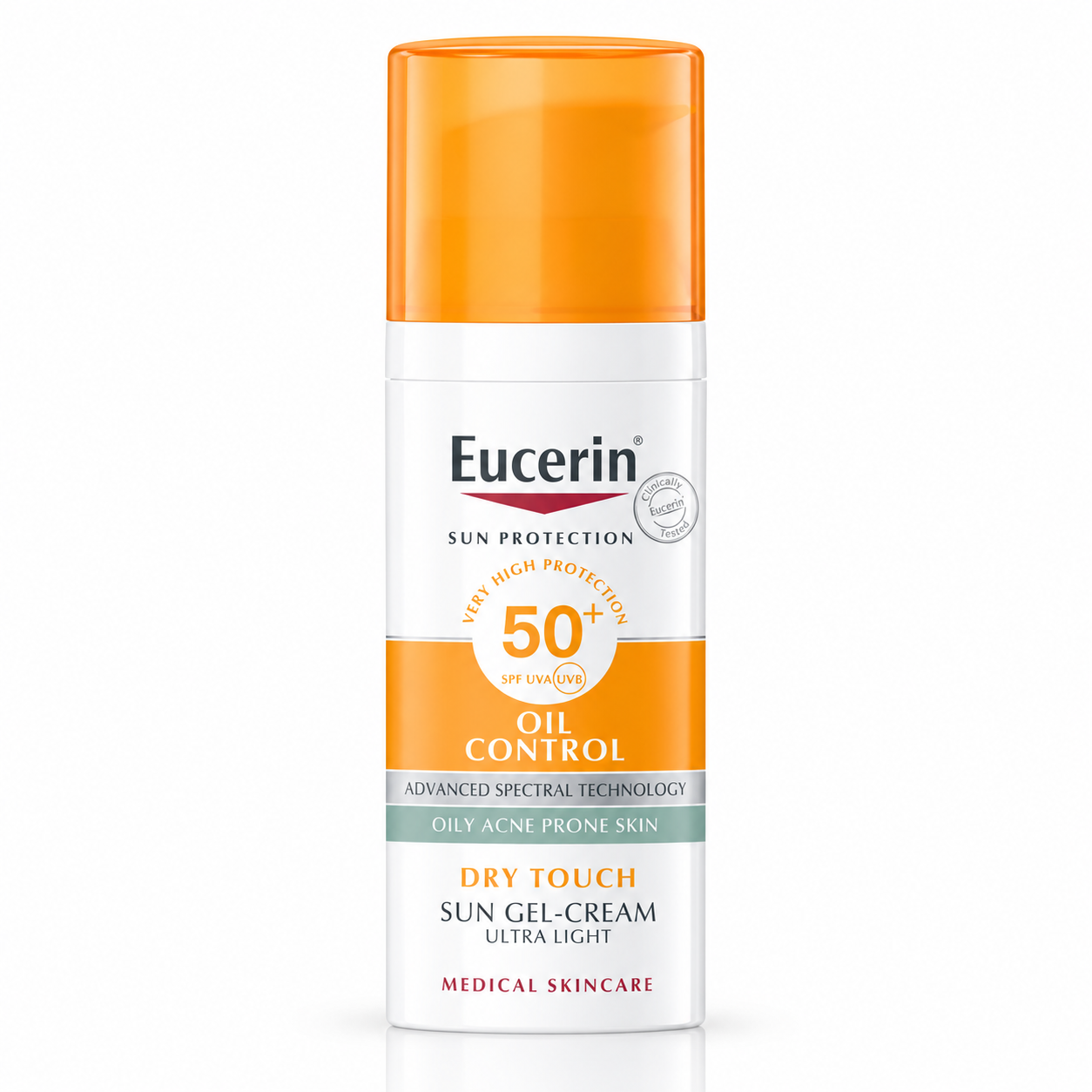
After treatment, avoid direct sunlight and follow your practitioner’s advice on when to resume sunscreen. Do not apply routine products to freshly needled skin unless specifically advised.
2. Review Retinoid Use
Retinoids are commonly used to manage acne, pigmentation and signs of photoageing.
Examples include:
- Tretinoin
- Adapalene
- Trifarotene
- Retinol
- Retinaldehyde
Although these ingredients are beneficial in appropriate circumstances, they may cause dryness or irritation.
Your treating practitioner may recommend temporarily adjusting your retinoid routine before or after microneedling, particularly if irritation is present.
There is no single evidence-based discontinuation interval suitable for every patient and every retinoid.
3. Consider Pigment-Suppressing Treatment Where Appropriate
For selected patients with melasma, previous post-inflammatory hyperpigmentation or a high risk of pigmentary complications, a dermatologist may recommend treatment to control pigmentation before a procedure.
Possible options include:
- Hydroquinone
- Azelaic acid
- Cysteamine
- Topical tranexamic acid
- Kojic acid
- Niacinamide
The choice depends on the individual patient’s diagnosis and risk factors.
A Special Note on Hydroquinone
Hydroquinone is an established topical treatment for hyperpigmentation, but it is not appropriate for everyone.
Its use, concentration and duration should be determined by an appropriately qualified healthcare professional.
Routine hydroquinone pretreatment is not necessary for every patient undergoing microneedling.
4. Optimise Your Skin Barrier
The skin should ideally be calm and free from significant irritation before treatment.
Microneedling may need to be postponed when there is:
- Active eczema or dermatitis in the treatment area
- Sunburn
- Significant skin irritation
- Active infection
- Open wounds
- Poorly controlled inflammatory skin disease
5. Control Active Acne
Although microneedling is used to treat acne scars, active inflammatory acne often requires treatment first.
Needling through inflamed or infected lesions may increase the risk of complications.
When Should Microneedling Be Avoided?
Microneedling may be inappropriate or require postponement in patients with:
- Active bacterial, viral or fungal skin infections
- An active herpes simplex outbreak in the treatment area
- Open wounds
- Significant uncontrolled inflammatory skin disease
- Certain bleeding disorders or clinically relevant anticoagulant use
- A history of abnormal scarring or keloid formation requiring individual assessment
- Impaired wound healing
Medical history, medication use and any previous complications following procedures should be reviewed before treatment.
What Happens During a Microneedling Treatment?
Before Treatment
The skin is assessed, and the treating practitioner determines the appropriate technique and treatment parameters.
The area is cleansed and prepared.
During Treatment
A topical anaesthetic may be applied to improve comfort.
The microneedling device is then passed over the treatment area using a technique appropriate for the patient’s skin and the condition being treated.
A session commonly takes around 30–60 minutes, depending on the treatment area and protocol.
After Treatment
It is common to experience:
- Redness
- Mild swelling
- Warmth or sensitivity
- Temporary dryness or tightness
These effects usually settle over the following days, although recovery varies according to treatment intensity and individual skin response.
Persistent worsening pain, spreading redness, pus, fever or unexpected blistering warrants medical assessment.
How Many Microneedling Sessions Will I Need?
The number of sessions depends on the condition being treated and the severity of the concern.
| Skin concern | Illustrative treatment range |
|---|---|
| Skin rejuvenation | Approximately 3–4 sessions |
| Enlarged pores or texture | Approximately 3–4 sessions |
| Atrophic acne scars | Approximately 4–6 sessions |
| Stretch marks | Approximately 4–8 sessions |
| Pigmentation concerns | Individualised; not routinely first-line |
These are illustrative treatment ranges, not guarantees or universally validated protocols. Sessions are usually separated by several weeks to allow recovery and remodelling.
Sessions are generally spaced several weeks apart to allow recovery and remodelling.
When Will Results Become Visible?
Some improvement in skin texture may become apparent within weeks.
However, collagen remodelling develops progressively, and the full improvement in acne scars or skin quality may take several months.
Maintenance requirements vary according to the condition treated and the patient’s response.
Microneedling vs Chemical Peels: What’s the Difference?
Although both treatments are used for skin rejuvenation, they work differently.
| Microneedling | Chemical peels |
|---|---|
| Creates controlled microscopic injuries | Uses chemical agents to produce controlled skin injury |
| Targets healing and collagen remodelling | Primarily promotes epidermal renewal; deeper peels can affect the dermis |
| Often used for atrophic acne scars and uneven texture | Often used for acne, pigmentation and photoageing |
| May suit many darker skin types with suitable technique | Safety depends on the peeling agent, depth and the patient’s skin |
Neither treatment is universally superior. The best approach depends on the specific skin concern and individual risks.
The choice depends on whether the main concern is acne scarring, pigmentation, skin texture or another dermatological condition.
Microneedling vs Laser Treatments
Lasers and microneedling can both improve skin texture and certain scars, but their mechanisms and risk profiles differ.
Microneedling creates mechanical micro-injuries.
Lasers use specific wavelengths of light to produce targeted effects in tissue. Depending on the technology, these may include pigment targeting, vascular treatment or controlled thermal remodelling.
The most appropriate procedure depends on the patient’s skin type, diagnosis, desired results and acceptable recovery time.
Importantly, radiofrequency microneedling is not identical to conventional microneedling, as it adds energy-based tissue heating and has its own indications and risk considerations.
Can Microneedling Be Combined With Other Treatments?
Yes. Depending on the indication, microneedling may be combined with other approaches.
These include:
- Prescription skincare
- Chemical peels
- Subcision for selected acne scars
- Certain pigmentation-treatment protocols
- Radiofrequency-based procedures
- Platelet-rich plasma (PRP)
Combination therapy should be individualised.
Not all topical products are suitable for application immediately after microneedling, when the skin barrier is temporarily disrupted. Products used during or directly after treatment require appropriate consideration of sterility, irritation and safety.
Microneedling Aftercare: How to Protect Your Results
Appropriate aftercare helps support healing and minimise avoidable irritation.
Keep skincare gentle. Use products recommended by your treating practitioner, generally focusing on mild cleansing and suitable moisturisation.
Avoid unnecessary irritation. Strong exfoliating acids, potentially irritating retinoids and other active treatments may need to be withheld temporarily.
Protect the skin from sunlight. Avoid excessive sun exposure during healing and follow your practitioner’s guidance on when and how to resume sunscreen application.
Avoid picking or scrubbing. Allow temporary dryness or flaking to settle naturally.
Follow product-specific instructions. The timing of makeup, exercise, swimming and reintroduction of active skincare varies according to treatment intensity and the condition of the skin.
Gentle Cleansing and Skin-Recovery Products
These are real MD DermOutlet products that may be considered in an individualised skincare or post-procedure routine. Suitability and timing depend on treatment intensity and skin condition.


Important: Do not put routine retail skincare products directly onto freshly needled skin without the treating practitioner’s approval. Sterility, irritation risk and the temporary disruption of the skin barrier are especially important immediately after treatment.
Frequently Asked Questions About Microneedling
Does microneedling hurt?
Most patients tolerate treatment reasonably well, particularly when a topical anaesthetic is used. The degree of discomfort depends on the treatment area, needle depth and technique.
Is microneedling good for acne scars?
Microneedling can improve certain atrophic acne scars, particularly selected rolling and boxcar scars. Deeper or tethered scars may require other treatments.
Is microneedling suitable for dark skin?
Yes, many patients with darker skin tones can undergo microneedling safely when appropriate techniques and precautions are used. However, the risk of post-inflammatory hyperpigmentation is not eliminated.
Can microneedling worsen pigmentation?
Yes. Any procedure that induces skin inflammation may worsen pigmentation in susceptible patients, especially if treatment selection, technique or aftercare is inappropriate.
Does microneedling permanently remove enlarged pores?
No. Microneedling may improve the appearance of pores in selected patients, but it cannot eliminate them.
Can I wear makeup after treatment?
Makeup is generally avoided immediately after treatment. Your practitioner will advise when it is appropriate to resume use, based on the treatment performed and skin recovery.
How long does redness last?
Redness usually improves within one to several days, although this varies with treatment intensity and individual skin sensitivity.
Can microneedling be combined with PRP?
Microneedling and PRP are sometimes used together, particularly in scar-treatment protocols. However, supporting evidence varies, and additional benefit is not established for every indication.
Is microneedling safe during pregnancy?
Because elective cosmetic microneedling has limited pregnancy-specific safety evidence, it is generally preferable to defer treatment until after pregnancy.
Can I undergo microneedling if I have active acne?
Patients with extensive active inflammatory acne may need acne treatment before undergoing microneedling for scarring.
How long do microneedling results last?
Results vary according to the indication, treatment protocol, ageing, subsequent sun exposure and underlying skin condition. Improvements from collagen remodelling may persist, but ongoing skin ageing and other factors continue.
Microneedling Packages Available Through MD DermOutlet
If you are considering microneedling for acne scars, skin texture or rejuvenation, treatment packages are available through MD DermOutlet.
However, we encourage patients who are uncertain about treatment suitability to contact the practice before purchasing a package.
A brief discussion or consultation can help determine whether microneedling is appropriate for your skin concerns or whether a different treatment may be more suitable.
Treatment suitability should always be established before the procedure.
Microneedling Services and Packages at MD DermOutlet
See the genuine Dermapen treatment listings below. Each image and treatment name links directly to the MD DermOutlet website. Please confirm suitability before purchasing a procedure or package.


Dermatologist’s Final Thoughts
Microneedling is a versatile treatment with an established role in the management of certain atrophic acne scars and promising applications in selected skin-rejuvenation concerns.
Its benefits come from stimulating controlled wound healing and gradual collagen remodelling, rather than simply exfoliating the surface of the skin.
For patients with skin of colour, careful treatment selection is particularly important because pigmentary complications can sometimes outweigh the intended benefits.
The best approach is therefore not to choose a treatment purely because it is popular, but to understand what is causing the skin concern and select a procedure that addresses it safely and effectively.
Healthy skin outcomes begin with the correct diagnosis, appropriate treatment selection and realistic expectations.
— Dr Matete Mathobela
Related Articles and Suggested Reading
- How Chemical Peels Help with Acne and Scarring
- Pigmentation in Skin of Colour
- Tranexamic Acid for Skin
- Cicaplast vs Toleriane After Skin Procedures
- Anti Aging Skincare Routine
Scientific References
- Juhasz MLW, Cohen JL. Microneedling for the Treatment of Scars: An Update for Clinicians. 2020. Read the research →
- Aust MC, et al. Percutaneous Collagen Induction Therapy: An Alternative Treatment for Scars, Wrinkles and Skin Laxity. 2008. Read the research →
- Cohen BE, Elbuluk N. Microneedling in Skin of Color: A Review of Uses and Efficacy. 2016. Read the research →
- Hou A, Cohen B, Haimovic A, Elbuluk N. Microneedling: A Comprehensive Review. 2017. Read the research →
- Davis EC, Callender VD. Postinflammatory Hyperpigmentation: A Review of the Epidemiology, Clinical Features and Treatment Options in Skin of Color. 2010. Read the research →
- Kaufman BP, Aman T, Alexis AF. Postinflammatory Hyperpigmentation: Epidemiology, Clinical Presentation, Pathogenesis and Treatment. 2018. Read the research →
- Dumbuya H, Grimes PE, Lynch S, et al. Impact of Iron-Oxide Containing Formulations Against Visible Light-Induced Skin Pigmentation in Skin of Color Individuals. 2020. Read the research →