





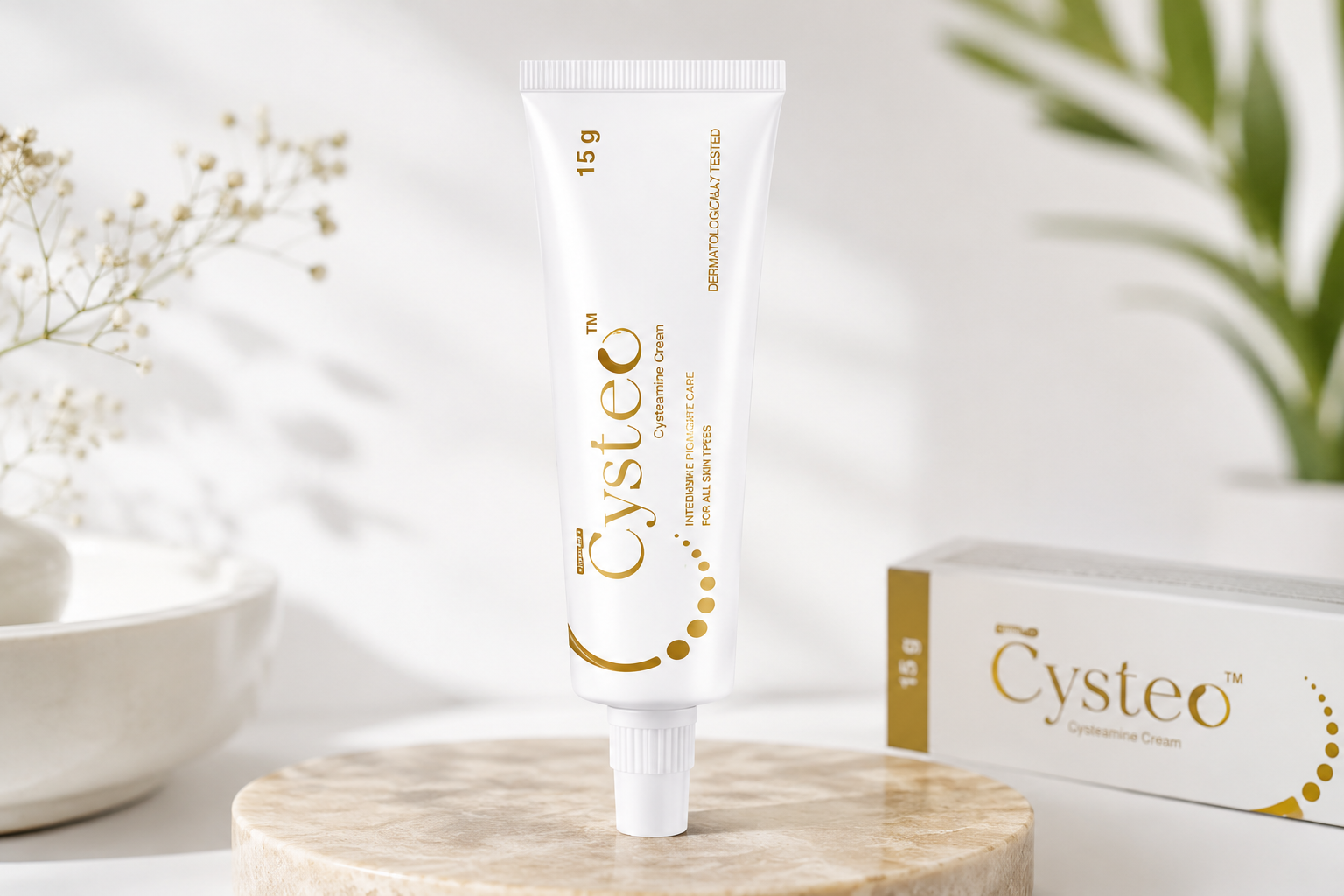
Cysteo® Cream for Hyperpigmentation: Benefits, How It Works, How to Use It and What Results to Expect
By Dr Matete Mathobela
Reviewed by Dr Matete Mathobela
Specialist Dermatologist | Hyperpigmentation & Skin of Colour Expert
Dr Matete Mathobela is a Specialist Dermatologist practising in Century City, Cape Town, Cape Gate Mediclinic and Life West Coast Private Hospital. She has a special interest in hyperpigmentation, melasma, acne, skin of colour and evidence-based skincare. As the founder of MD Cosmeceuticals by Matete Derma and MD Dermoutlet, she regularly manages patients with melasma and post-inflammatory hyperpigmentation using personalised treatment plans that combine topical therapies, prescription medications and in-clinic procedures.
Medical Disclaimer
This article is intended for educational purposes only and reflects Dr Matete Mathobela’s clinical experience together with current scientific evidence. It is not intended to replace a consultation, diagnosis or personalised treatment plan from a qualified healthcare professional. If you have persistent or worsening skin concerns, consult a dermatologist for an individual assessment and appropriate treatment.
2-Minute Read
Thinking about using Cysteo® Cream for hyperpigmentation? Here’s what you need to know.
Cysteo® Cream is a cysteamine-based, hydroquinone-free treatment designed to help improve melasma, post-inflammatory hyperpigmentation (PIH), acne marks and uneven skin tone. Rather than bleaching the skin, cysteamine works by regulating excess melanin production through multiple pathways, making it particularly valuable for people with skin of colour.
In this dermatologist-reviewed guide, you’ll learn how Cysteo® works, who it’s best suited for, how to use it correctly, how long results typically take, how it compares with Cyspera®, and how to incorporate it into a complete pigmentation routine. You’ll also discover common mistakes to avoid and why daily sunscreen is essential for achieving and maintaining results.
Introduction.
Hyperpigmentation is one of the most common skin concerns affecting people of all skin types, but it is particularly prevalent in individuals with medium to dark skin tones. Conditions such as acne, eczema, insect bites, hormonal changes and excessive sun exposure can all stimulate the skin to produce excess melanin, leaving behind stubborn dark patches that may persist for months or even years. If you’ve ever wondered why these marks seem to linger long after the original skin condition has healed, our article on Hyperpigmentation in Skin of Colour provides a detailed explanation of why darker skin is more susceptible to post-inflammatory pigmentation and how early treatment can make a significant difference.
Fortunately, advances in dermatology have expanded our treatment options beyond traditional depigmenting agents such as hydroquinone. One of the most exciting innovations is Cysteo® Cream, a cysteamine-based topical treatment that offers an effective, hydroquinone-free approach to managing melasma, post-inflammatory hyperpigmentation (PIH) and uneven skin tone. Cysteo® has gained popularity because it targets multiple pathways involved in pigment formation while being suitable for a wide range of skin types, including skin of colour.
If you’re new to the world of pigmentation treatments, you may also enjoy reading Hyperpigmentation: Let’s Talk Glow (and How to Get It Back!), where we discuss the common causes of pigmentation, treatment expectations and why a personalised skincare routine is essential for achieving long-lasting results.
In a Nutshell
- Cysteo® Cream contains cysteamine, a hydroquinone-free ingredient that helps reduce excess pigmentation.
- It is commonly used to treat melasma, post-inflammatory hyperpigmentation (PIH) and uneven skin tone.
- Most people begin seeing improvement after 6–8 weeks, with optimal results often taking 3–6 months.
- Daily broad-spectrum sunscreen is essential to prevent pigmentation from returning.
- Cysteo® often works best when combined with other dermatologist-recommended treatments as part of a personalised pigmentation routine.
- Consistency is key—pigmentation fades gradually, not overnight.
What Is Cysteo® Cream?
Cysteo® Cream is a topical depigmenting treatment containing cysteamine, a naturally occurring aminothiol that is produced in human cells during the metabolism of coenzyme A. Cysteamine also functions as a powerful intracellular antioxidant, helping protect cells against oxidative stress while influencing several pathways involved in melanin production. Unlike hydroquinone, which primarily inhibits tyrosinase, cysteamine exerts its effects through multiple mechanisms, making it an attractive option for patients seeking a hydroquinone-free treatment for chronic pigmentation disorders.
One of the greatest advantages of cysteamine is that it does not bleach the skin. Instead, it helps regulate excessive melanin production in areas of abnormal pigmentation while preserving the skin’s natural colour. This makes it particularly useful for treating melasma and PIH in patients with darker skin tones, where overtreatment can sometimes result in unwanted hypopigmentation.
We’ve explored the science behind cysteamine in greater depth in our article Cysteamine for Clear Skin: Fight Dark Spots and Melasma Effectively, where we discuss why cysteamine has become one of the most promising advances in pigmentation management.
Shop Cysteo on mddermoutlet.
How Does Cysteamine Work?
Melanin production is a complex biological process involving numerous enzymes, inflammatory mediators and oxidative pathways. Following inflammation or ultraviolet radiation exposure, melanocytes become activated and begin producing increased amounts of melanin, resulting in visible pigmentation. In chronic conditions such as melasma, hormonal influences further stimulate pigment production, making treatment more challenging.
Cysteamine works by inhibiting tyrosinase activity, reducing oxidative stress within melanocytes and interfering with several biochemical pathways involved in melanogenesis. Rather than acting through a single mechanism, it targets pigment production at multiple levels, helping reduce excess melanin while promoting a more even skin tone over time. Because of this multi-target approach, cysteamine has demonstrated significant improvements in both epidermal and mixed-pattern pigmentation disorders.
Unlike treatments that provide rapid but temporary improvement, cysteamine gradually normalises pigment production. Patients should therefore understand that improvement occurs progressively over several weeks, with optimal results typically achieved after consistent use over several months.
Which Skin Conditions Can Cysteo® Help Treat?
Cysteo® Cream is commonly recommended by dermatologists for the treatment of melasma, one of the most challenging pigmentary disorders affecting predominantly women. Melasma often develops during pregnancy, with hormonal contraception or following chronic sun exposure, and has a high tendency to recur without ongoing maintenance therapy and diligent photoprotection.
Cysteo® is also an excellent option for post-inflammatory hyperpigmentation, which develops after inflammatory skin conditions such as acne, eczema, psoriasis, insect bites or cosmetic procedures. In many patients, the original inflammation resolves quickly while the pigmentation persists for several months.
If acne marks are your primary concern, you may find our article Does Benzac AC 5% Gel Remove Dark Spots? helpful, as it explains why treating active acne alone does not necessarily remove the pigmentation left behind.
Other conditions that may benefit from cysteamine include sun-induced pigmentation, solar lentigines, uneven skin tone and selected cases of pigmentation following inflammatory dermatoses. Treatment should always begin with an accurate diagnosis because different pigmentation disorders often require different treatment strategies.
Who Is an Ideal Candidate for Cysteo® Cream?
Cysteo® may be suitable for adults who have:
- Melasma
- Acne marks
- Post-inflammatory hyperpigmentation
- Sun spots
- Uneven skin tone
- Skin of colour that is prone to developing dark marks
You should consult a dermatologist before starting treatment if you are pregnant, breastfeeding, have active eczema, broken skin, or are unsure about the cause of your pigmentation.
This helps ensure the correct diagnosis and allows a personalised treatment plan to be developed.
Why Dermatologists Are Choosing Cysteamine More Often
Hydroquinone has long been considered the gold standard for treating hyperpigmentation. However, because prolonged continuous use may increase the risk of irritation and, rarely, exogenous ochronosis, many dermatologists prefer incorporating non-hydroquinone alternatives into long-term treatment plans. Cysteamine has emerged as one of the most promising alternatives because it provides clinically meaningful pigment reduction while offering a favourable safety profile.
Clinical studies have shown that cysteamine significantly improves melasma severity, reduces pigmentation intensity and is well tolerated by most patients when used correctly. It can also be incorporated into maintenance therapy after successful hydroquinone treatment or used as first-line therapy in patients wishing to avoid hydroquinone altogether.
How to Use Cysteo® Cream Correctly
Using Cysteo® correctly is essential for achieving the best results while minimising irritation. Always follow the instructions provided with your product or those given by your dermatologist. Most formulations are designed as short-contact therapy, meaning they are applied to clean, dry skin, left on for the recommended contact period and then washed off before the remainder of your skincare routine is applied.
Avoid applying Cysteo® to broken, inflamed or infected skin. If irritation develops, your dermatologist may advise reducing the frequency of application before gradually increasing as tolerated.
Because pigmentation improves gradually, consistency is far more important than applying excessive amounts of product. Missing applications or stopping treatment prematurely often delays results.
Suggested Pairing
Cysteo® works best when incorporated into a complete skincare routine rather than being used in isolation. Supporting the skin barrier, reducing inflammation and protecting against ultraviolet radiation can significantly improve pigmentation outcomes.
Recommended products:
Common Mistakes When Using Cysteo® Cream
Although Cysteo® is highly effective, several common mistakes can reduce its effectiveness or increase the risk of irritation.
These include:
- Applying too much product, believing that more cream will produce faster results.
- Using the product inconsistently or stopping treatment too early.
- Forgetting to wear sunscreen every day.
- Combining several active ingredients without professional guidance.
- Applying the product to irritated or damaged skin.
- Expecting pigmentation that developed over many years to disappear within a few weeks.
Pigmentation disorders require patience. Consistent treatment combined with good sun protection almost always produces better long-term results than frequently changing products.
Building an Effective Pigmentation Routine
Cysteo® works best as part of a comprehensive skincare routine rather than as a standalone treatment. An effective pigmentation routine should address pigment production, oxidative stress, skin barrier function and photoprotection simultaneously.
In the morning, a gentle cleanser should be followed by an antioxidant such as vitamin C, a moisturiser appropriate for your skin type and a broad-spectrum sunscreen. In the evening, Cysteo® may be incorporated alongside other dermatologist-recommended ingredients depending on your skin’s needs.
If you’re unsure how to combine these products safely, we’ve created a step-by-step MD Cosmeceuticals Pigmentation Routine: A Dermatologist’s Guide to Melasma & Dark Spotsexplaining exactly how to build an effective morning and evening routine for hyperpigmentation.
Build a Complete Pigmentation Routine
For the best results, combine Cysteo® with complementary ingredients that target different pathways involved in hyperpigmentation. Antioxidants help reduce oxidative stress, niacinamide supports the skin barrier and regulates pigment transfer, while moisturisers help minimise irritation associated with active treatments.
Recommended products:
- MD Cosmeceuticals Vitamin C + Glutathione Serum
- MD Cosmeceuticals Niacinamide Serum
- MD Cosmeceuticals Brightening Cream
Why Sunscreen Is Essential
No pigmentation treatment can overcome continued ultraviolet exposure. Every day that unprotected skin is exposed to sunlight, melanocytes receive signals to produce more pigment, making treatment slower and increasing the likelihood of recurrence.
Broad-spectrum sunscreen should therefore be regarded as an essential treatment rather than an optional cosmetic product. For patients with melasma and darker skin tones, tinted sunscreens containing iron oxides offer additional protection against visible light, which also contributes to pigmentation.
If you struggle to find a sunscreen that doesn’t leave a white cast, our guide Sunscreen for Dark Skin: Bye-Bye White Cast, Hello Glow, discusses what to look for and highlights dermatologist-recommended options suitable for deeper skin tones.
Dermatologist’s Recommendation
Daily sunscreen is one of the most important steps in preventing pigmentation from returning. Even the most effective depigmenting cream cannot overcome continued UV and visible light exposure.
Recommended products:
Can Cysteo® Be Combined With Other Treatments?
Yes. In fact, combination therapy often produces better results than relying on a single treatment alone. Depending on your diagnosis, your dermatologist may recommend combining Cysteo® with prescription retinoids, azelaic acid, vitamin C, niacinamide or carefully selected chemical peels. Procedures such as microneedling and superficial chemical peels may also complement topical therapy when performed in appropriately selected patients.
Treatment should always be individualised according to the underlying cause of pigmentation, skin type and previous treatment response.
Combination Therapy
Many dermatologists combine cysteamine with other evidence-based ingredients to target pigmentation through multiple mechanisms. Depending on your skin type and diagnosis, this may include antioxidants, retinoids or advanced pigment-correcting serums.
Recommended products:
- SkinCeuticals Discoloration Defense
- MD Cosmeceuticals Retinoid Cream
- MD Cosmeceuticals Vitamin C + Glutathione Serum
What Results Can You Expect?
Every patient’s skin responds differently, but most people experience gradual improvement rather than an overnight transformation.
A general timeline is:
Weeks 1–2
- Your skin is adapting to treatment.
- Pigmentation may appear unchanged.
- Some patients notice mild dryness or irritation.
Weeks 4–8
- Early fading of superficial pigmentation.
- Skin tone begins to appear more even.
- Acne marks often start improving first.
Months 2–3
- More noticeable improvement in post-inflammatory hyperpigmentation.
- Melasma gradually becomes lighter.
- Continued improvement with consistent sunscreen use.
Months 3–6
- Maximum improvement for many patients.
- Maintenance treatment helps reduce recurrence.
Remember that sun exposure, hormones, inflammation and inconsistent skincare can all influence your results.
Cysteo® vs Cyspera®
Patients frequently ask whether Cysteo® and Cyspera® are the same product. Both are cysteamine-based treatments developed to address hyperpigmentation, but they differ in formulation, packaging, application protocols and pricing. Rather than choosing based on brand alone, it is more important to consider your skin type, treatment goals and dermatologist’s recommendations.
For a detailed comparison, read our article Cyspera vs Cysteo: Which Cysteamine Cream Is Best for Melasma and Dark Spots?, where we compare the similarities and differences between these two popular cysteamine products:
Shop Cyspera on mddermoutlet.
What Results Can You Expect?
Most patients begin noticing gradual improvement after approximately six to eight weeks of consistent use, although melasma and longstanding pigmentation often require three to six months before maximal improvement becomes evident. Results vary depending on the underlying diagnosis, depth of pigmentation, sun exposure, treatment adherence and whether combination therapy is used.
Pigmentation disorders are chronic conditions for many patients. Even after improvement has been achieved, maintenance therapy and daily sunscreen remain essential for reducing recurrence.
A Dermatologist’s Perspective
One of the biggest misconceptions I encounter in clinical practice is that pigmentation can be treated with a single “miracle cream.” In reality, successful treatment almost always requires a combination of the right topical ingredients, strict daily sun protection and patience.
Many patients become discouraged after only a few weeks and stop treatment just as improvement is beginning. Others continue developing new pigmentation because they underestimate the importance of sunscreen.
When used correctly and incorporated into a personalised skincare routine, Cysteo® is an excellent option for treating melasma and post-inflammatory hyperpigmentation. However, the best results are achieved when treatment is tailored to the underlying cause of pigmentation rather than simply treating the visible dark marks.
Final Thoughts
Hyperpigmentation is rarely caused by a single factor, and successful treatment usually requires a combination of targeted skincare, consistent sun protection and patience. Cysteo® Cream represents an exciting evidence-based option for patients seeking a hydroquinone-free approach to treating melasma, post-inflammatory hyperpigmentation and uneven skin tone. When incorporated into a personalised skincare routine and combined with diligent photoprotection, it can help restore a brighter, more even complexion while supporting long-term skin health.
If you’re unsure whether Cysteo® is the right choice for your skin, consult a dermatologist for an accurate diagnosis and a personalised treatment plan. You can also explore our range of pigmentation products and skincare solutions at MD Dermoutlet to build a routine tailored to your skin’s unique needs.
Frequently Asked Questions
1. What is Cysteo® Cream used for?
Cysteo® Cream is a cysteamine-based depigmenting treatment used to improve melasma, post-inflammatory hyperpigmentation (PIH), acne marks, sun-induced pigmentation and uneven skin tone. It works by targeting multiple pathways involved in melanin production, helping to gradually fade excess pigmentation.
2. How long does Cysteo® Cream take to work?
Most patients begin noticing improvement after 6 to 8 weeks of consistent use. More stubborn pigmentation, such as melasma, may require 3 to 6 months of treatment for optimal results. Consistency and daily sunscreen use are essential.
3. Is Cysteo® better than hydroquinone?
Hydroquinone remains one of the most effective treatments for hyperpigmentation. However, Cysteo® offers a hydroquinone-free alternative that has shown comparable efficacy in several clinical studies while being suitable for long-term dermatologist-directed treatment plans.
4. Can Cysteo® be used on all skin types?
Yes. Cysteo® is suitable for all skin types and is particularly valuable in patients with darker skin tones (Fitzpatrick IV–VI), who are more prone to developing post-inflammatory hyperpigmentation.
5. Can I use Cysteo® every day?
Most formulations are designed for daily use as a short-contact treatment. Always follow the manufacturer’s instructions or your dermatologist’s advice, as treatment frequency may vary depending on your skin type and tolerance.
6. Can I use Cysteo® with retinol?
Yes. Cysteo® can often be combined with retinoids, but they may need to be introduced gradually or used at different times to minimise irritation. Your dermatologist can recommend the best routine for your skin.
7. Should I use moisturiser after Cysteo®?
Yes. After washing off the product (if using a short-contact formulation), applying a gentle moisturiser can help support the skin barrier and reduce dryness or irritation.
8. Can Cysteo® treat acne scars?
Cysteo® does not treat the scars themselves, but it can improve the dark marks (post-inflammatory hyperpigmentation) that often remain after acne has healed.
9. Does Cysteo® remove melasma permanently?
Unfortunately, no treatment permanently cures melasma. Cysteo® helps reduce pigmentation, but maintenance therapy and daily sun protection are essential to reduce the risk of recurrence.
10. Can I use vitamin C with Cysteo®?
Yes. Vitamin C complements Cysteo® by providing antioxidant protection and helping brighten the complexion. Vitamin C is generally used in the morning, while Cysteo® is incorporated into the evening routine according to product instructions.
11. Why is sunscreen so important when using Cysteo®?
Ultraviolet radiation and visible light stimulate melanocytes to produce more pigment. Without daily sunscreen, existing pigmentation may persist, and new pigmentation can develop despite treatment.
12. Can I combine Cysteo® with chemical peels?
Yes. Superficial chemical peels may enhance pigmentation improvement when combined with topical treatments, but they should be performed under the guidance of a dermatologist to minimise irritation and post-inflammatory hyperpigmentation.
13. Is Cysteo® safe for long-term use?
Current evidence suggests that cysteamine is well tolerated and can be incorporated into long-term pigmentation management under dermatological supervision.
14. What should I avoid while using Cysteo®?
Avoid excessive sun exposure, skipping sunscreen, picking at your skin, and using multiple potentially irritating active ingredients simultaneously unless advised by your dermatologist.
15. Where can I buy Cysteo® Cream in South Africa?
Cysteo® Cream is available from authorised skincare retailers, including MD Dermoutlet. Purchasing from reputable suppliers helps ensure you receive genuine products and appropriate usage advice.
References
-
- Mansouri P, Farshi S, Hashemi Z, Kasraee B. Evaluation of the efficacy of cysteamine 5% cream in the treatment of epidermal melasma. British Journal of Dermatology. 2015;173(1):209–217. https://pubmed.ncbi.nlm.nih.gov/25251767/
- Farshi S. Comparative study of topical cysteamine and hydroquinone in the treatment of melasma. Australasian Journal of Dermatology. 2020. https://pubmed.ncbi.nlm.nih.gov/32981068/
- Nouri K, et al. Topical cysteamine for the treatment of melasma: A systematic review. Journal of Cosmetic Dermatology. 2021. https://pubmed.ncbi.nlm.nih.gov/34591360/
- Kasraee B. Topical stabilized cysteamine: A new treatment for hyperpigmentation disorders. Journal of Drugs in Dermatology. 2021. https://pubmed.ncbi.nlm.nih.gov/34898155/
Like & Share